The Bechdel test was designed to look at movies and Television shows and evaluate if they portrayed women as one dimensional or not. This is determined by three rules or points. Firstly that there are at least two named women. Secondly that these two named women talk to each other. Thirdly that these two women talk to each other about something not reliant upon or about a man. The Bechdel test has been expanded from simply only being applied to movies and television shows to works of fiction, which include most if not all video games. It is worth nothing that the Bechdel test can encounter some problems when being applied to video games. This occurs in two major points.
First that a majority of video games set a male as the player character, and since the perspective and view of that game is through that character, it is likely that said male character will drive conversation and be the focus of narrative. Secondly in that video games have a variance of genres within the industry. Whether its horror games, shooters, action adventure, or real time strategy, these different genres of video games play in very different ways. A shooter like Call of Duty focuses on having the player shoot from a first person perspective and so presents the world and other characters of it from that perspective. While a real time strategy looks down upon the world from a isometric or birds eye view, and has the player control units and command them to build, move around, attack etc.. Difference in player perspective changes a lot of how genders are portrayed in a video game, which proves troublesome for applying the Bechdel test. It creates a problem of what counts in the Bechdel test and what are the limitations of the game. To examine this I'll be looking at Overwatch and a controversy that occurred during one of its testing phases before its release.
Overwatch is a video game made and produced by Blizzard, a largely successful company best know for making World of Warcraft. Overwatch was release on the 24th of May, 2016. Before that time though it went through several beta phases, which in the video game industry serve as several testing phases. The beta phase that the controversy occurred during was considered a Closed Beta, meaning that only people who were directly asked through email or other connections were able to play and test the game. Public scrutiny was available because Blizzard allowed these players to publicly post pictures, stream the game online to show others, and generally be open about playing it short of writing rating reviews of the unfinished game. While beta phases are standard within the gaming industry, this openness of Blizzard during it is highly unusual and not common place, but very consumer friendly.
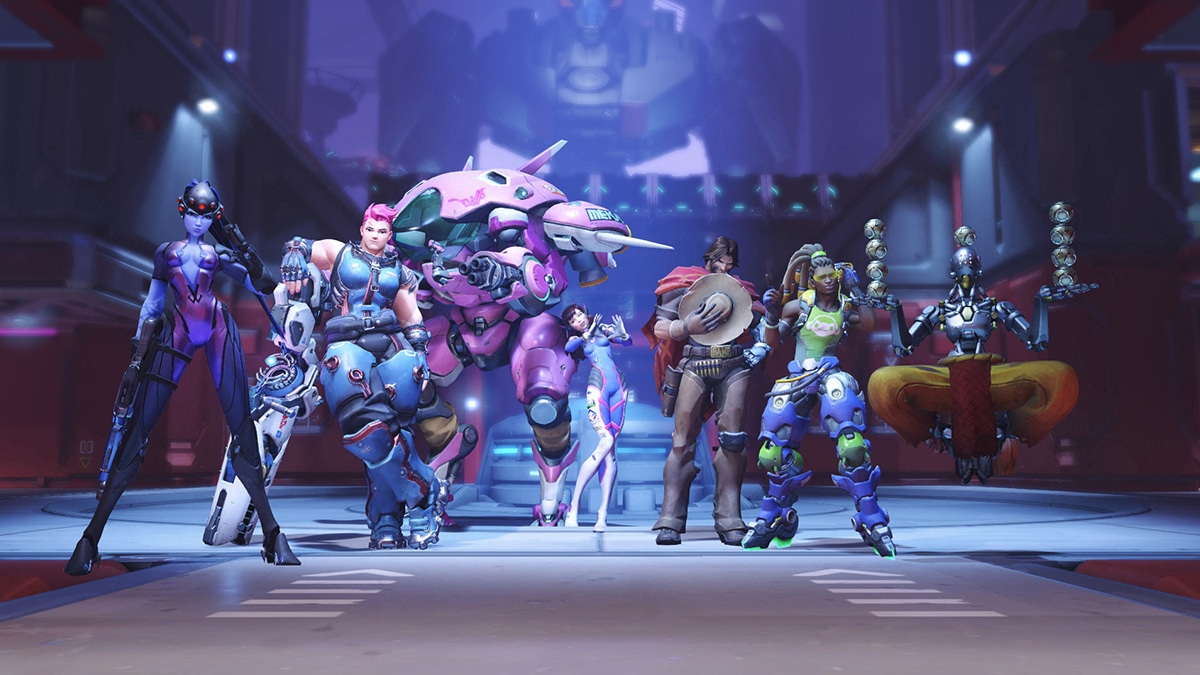
During this beta phase a comment was put on the Blizzard/Overwatch forums by a user Flipp. User Flipp's comment expressed both a gratitude for the many well developed female characters of Overwatch and then a concern of how one victory pose was ruining one of the characters. Victory poses in Overwatch are a selection of stance choices that are available to players and show at the end of the match where the winning team is standing together as their characters with each person's choice of victory pose. User Flipp had a problem with a victory pose for the character Tracer, arguing that the pose was overly sexualizing the character. Flipp went on explaining how their daughter loves Overwatch a great deal and will get to grow up alongside these characters, and that they (Flipp) don't want funny, spunky, women like Tracer to be reduced to sex symbols.

At first glance this could be seen as a problem with Overwatch's sexualization of its female characters. After all there are several other female characters, all could be considered sexualized in some way. However for forum use Flipp the problem was not over sexualization as a whole in the game, but simply on the character Tracer in this pose. The argument being that its bad because this pose doesn't fit her personality. Use Flipp detailed later in response to others that Widow being sexualized is completely fine to them because it is a part of her personality.
One way to look at the argument happening in this controversy is whether or not the women are fairly portrayed in Overwatch, with a focus on the character Tracer. So take the Bechdel test and apply it to Overwatch the video game. You'll find that while the game has seven named female characters at no point will they talk to each other for 60 seconds. In fact you'll find that no two characters or even a single character will talk for 60 seconds. This is because of the genre of video game that Overwatch is along with the focus that Blizzard took in designing it.
Overwatch is a first person shooter (FPS) specifically focused on players versus players. This means that Overwatch has no single player mode or story driven piece. All gameplay is focused on two teams of players competing in different game modes and maps. That doesn't mean that the characters don't interact. At the beginning of each match dependent upon the characters chosen by your team, two of the six characters will interact in a small dialogue. These dialogues are generally only one or two sentences from each of the two characters and last about 5 to 10 seconds. These dialogues convey a small piece of each characters personality but moreso can hint at character relationships. Overwatch does not convey its story, history (often called lore for video games), and character relationships through gameplay story telling but through dialogue as described above, and cosmetic voicelines and emotes that players can acquire. These voicelines and emotes help convey the personality of each character and are activatable by the player at any time while playing that character. Widow for instance is French, and many of voicelines her include or are exclusively in French. These custimizables have an increadible amout of variety but being activated by the player, and not actually interacting with anything or anyone else, they do not help towards passing the Bechdel test.
Overwatch's main way of telling story and history of the world of Overwatch is actually not in the game at all. Rather it is on their website through text and various short animated videos. On the Overwatch site all the characters can be found and it'll detail their abilities but also provide some backstory for each of character. In about four small paragraphs each character is given a little more depth into how they are the way they are within the game, and some events that lead to that. Though it often tells of interaction between characters, it does not detail any talking between them and so fails the Bechdel test there. Lastly there are the short animated videos. These were done by Blizzard to help publicize the game, build depth within the Overwatch universe, and show character interaction and relationships. Each video features and focuses upon at least one Overwatch character. Of four videos one features two named women, Tracer and Widow, who talk to each other and interact.
In this video Tracer and Widow's conversation spans across about 3 minutes. However it is punctuated and broken up by action segments. Could this pass the Bechdel test? Perhaps it could if at all, but that raises a bigger question. Does this allow Overwatch to pass the Bechdel test or does this video exclusively pass the Bechdel test, much as a single episode of a televeision show would.There are video games that pass the Bechdel test with flying colurs, such as the Witcher 3. However the Witcher 3 has two main focuses of gameplay for the player, combat and story. When not fighting monsters your either talking with other characters, listening to other characters interact, or traveling to doing any of the above.
Overwatch shows the Bechdel test at its weakest. The Bechdel test is reliant upon there being a story to pass any judgement upon. Though currently intended for any work of fiction, does the Bechdel test not need tweaking and changes? For video games as an industry, is the Bechdel test truely suited as it is to judge them? I think it is not. I think the Bechdel test would need at the very least some tweaking in order to be fully applicable to video games. Video games go about things very differently and the Bechdel test judges on material many games simply won't have, much like Overwatch. That does not mean that the games miss represent women. Overwatch has been largely praised for bring a collection of well developed female characters to the genre of first person shooters.
The Bechdel test is largeyl reliant upon there being a story, and that being a or the focus point of the fictional content. Many video games and entire genres of video games do not give much or any focus upon story, and so will be doomed to fail the Bechdel test. I think in order to adjust to judge video games, the Bechdel test needs to expand the ways in which it judges. Currently it judges based upon two named women talking for a duration. In doing so it hopes to evaluate that there are more to these women than simply their interaction with men. But do women not show this same depth when alone or not directly interacting with other people? The Bechdel test has a good focus on portrayal, which it should keep. How can that be expanded though? Fair portrayal of women can be expressed in more ways than simply their interaction with one another. Perhaps examining the motivation in female characters can help reveal their depth to this extent. Or look at their interaction portrayal not with others but alone or with objects. Do the voicelines in Overwatch show a reliance on men or can they show the depth of these female characters? To what extent can depth be shown through other means. These ideas by no means would fix the test entirely for being applied to all video games, but I think they are steps in the right direction, or at the very least the proper questions to ask towards a better end.
Word Count: 1836



No comments:
Post a Comment