Video games as part of media heavily influence people's expectations on any topic imaginable. This can lead to a numbing effect of a topic like sexual portrayal of characters in games. This numbing being the idea that through extensive portrayal of women and men in video games, highly sexualized or ideal physical images are now blindly accepted, or even expected. To display this look at a controversy that occurred for Overwatch during it's closed beta in late March of 2016.
Overwatch is a video game released by Blizzard on 24 May, 2016. During the month of March it had a closed beta. Closed Beta being a testing period where people invited by Blizzard through email, were allowed to play the game, test it, and stream it.
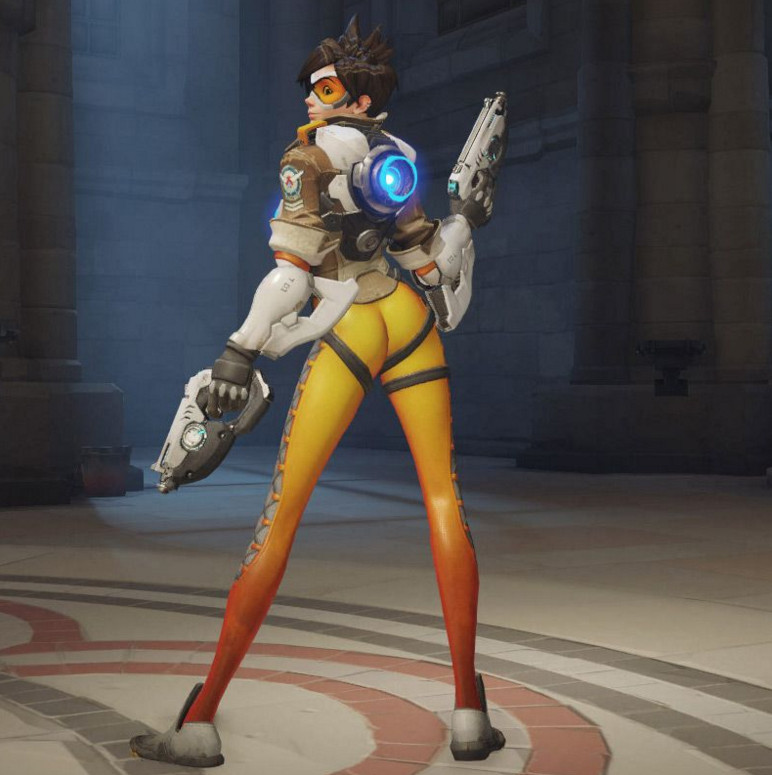
During this beta time, a complaint was brought to Blizzard on their forums regarding a specific character and one of her optional victory poses. A forum user under the username Flipp, made a forum post saying that the pose turned Tracer (the character shown above) into a bland sex symbol and should be removed. Flipp went on to detail how their daughter knows who Tracer is and will be growing alongside her. Flipp expressed how they had a daughter who wanted to watch the Overwatch Recall trailer every morning. Their own daughter being able to grow up alongside to these characters, Flipp asked Blizzard to focus on their commitment to strong female characters and avoid and remove elements like this pose that would undermine that.
On the surface this controversy looks to deal with the overly sexualized nature of the victory pose put in the game. In fact though, and as user Flipp went to clarify in response to others on the forum, this controversy was about a character personality and portrayal disconnect. Tracer's body image and outfit were not under scrutiny here. Rather the focus of this controversy is that this pose conflicts with Tracer's personality. Meanwhile characters like Widow or D. Va who also have highly sexualized poses are not being criticized here, and as acknowledge by user Flipp, it is because that sexual nature is a part of their personality.
In this controversy a numbing effect is easily viewable. Looking at those agreeing with user Flipp's argument, the sexual nature of material within the game is very important to them. However it strays away from the typical mass media article opinion of sexualization within games being a blatantly bad thing that needs removing. Instead their focus is that sexualized material needs to be justified in some way. This shows the numbing that media, and in particular video games have induced.
Within this video there is numbing as well. As a satirical it shows numbing but an awareness of it. This video in particular shows not only the numbing of sexualization of characters in games, but also hints at the blind acceptance of consumers being right.
Over time video games have begun to include more and more sexualized content in various forms, from posters on in game walls, to vanity options for the player, and on to gameplay. Those consuming this material become acclimatized to it and begin to expect more of the same. Slowly the intesity and abundance of this material has increased in the video game industry. People eventually become numbed enough to not only accept without question the overly sexualized material in video games but to expect it. This numbing leaves games that do not reach a certain threshold of sexuality in their game less engaging and interesting for the numbed players. Which leads to a spiraling increase of sexuality content in games, furthering the over sexualized portrayal of both genders.
Solutions and counters against this problem look rather thin. Gamers have come to expect a certain degree of oversexualization of characters in video games. To remove that or lessen in any substatial way would of course be noticeable and spur a reaction. The largest reaction by probability is that people would not buy that game. After all, that game though closer to reality or serving to educate consumers about this problem will not have what the consumer wanted. This could lead to companies not wanting to take the risk. Why put out a revolutionary game, that would influence people towards more realistic expectations and standards if its unlikely to sell well. Instead companies are more likely, and as history shows, do the tried and true by giving the consumer the wants. This often being more of the same that the consumer bought just last year with little to minimal changes. A good example of this being Call of Duty games.
Was user Flipp's approach the right way then? Approaching the company of a video game receiving a lot of appreciation before launch, and expressing the concerns with some pieces of it to incite change. This can work and in the case of Overwatch did,thought it must be remembered this was during a testing period where drastic changes happen is the point. Acknowledgements should also be given that during the entirety of Overwatch's public awareness, Blizzard has been highly communicative with the community on concerns, topics, changes, and explanations, which is highly unusual for the video game industry. The point being that doing changes in this way requires a conversation being held on both ends, consumers and the company both have to be in communication. Should one be desynced from the other, arguing amongst itself, or not taking a large part in the discussion on a game, this method fails.
For any solution to work, several things need to occur. Video games as media are not solely under the weight of this problem. It occurs in a far wider scope than just in that of video games. For any change to occur the media and what is desired from it has to change. This means having companies that are willing to put of content and/or material that lessens or change for the better the over sexualized standards that lead to increased numbing. Secondly consumers have to change their desires and values from the media. The media will make what people want and consumers make a far louder impact in the media when they speak with their wallets as well as their mouths.
Flipp's argument has some merit here. One thing to take away from it is that video games can have strong, well rounded characters. Overwatch is respected for having done so recently, and consumers can express to the media the reasoning of why this works and show the support of it. Doing so will lead to the production of more well rounded characters.
Numbing is something that happens naturally in order to make living easier. Its how ideas like "the mundane day to day" come about. Its a acclimatization to a commonality. Whenever this numbing may pose a problem or lead to something far worse, the way to change it is by changing what is common. For the media, as a business is serves to every day produce what sells, what captures people's eyes. Changing the media happens from a change in its consumers. To create change think of where the problem begins and how it is produced, not what puts it out of sight or mind.


No comments:
Post a Comment