Both men and women are stereotyped in the media primarily as less real, more perfect, and more predictable. Stereotypes are more commonly portrayed in the media because they are easier to create. Some of the stereotypes put on men include them being brave, strong, rational thinkers, independent, and leaders. These stereotypes affect the expectations that women have of men in relationships and they even affect how men see other men in friendships and the work setting for example. Not only do these stereotypes affect how society views men, they also affect how men view themselves. Men shape their own views about how they should act and look and base their success as men on these assumptions. On the other hand, men are discouraged from "unmanly" traits such as the ability to feel or talk about a range of emotions, including fear, hurt, confusion or despair. Men are also not encouraged to learn to work cooperatively without the need for control, to love in a nonsexual way, and to solve conflicts without violence. They have to constantly prove their masculinity.


A few days ago, I watched the movie Deadpool (2016) about a man names Wade Wilson (Ryan Reynolds) who is a former Special Forces operative who now works as a mercenary. His world comes crashing down when evil scientist Ajax (Ed Skrein) tortures, disfigures, and transforms him into Deadpool. The rogue experiment leaves Deadpool with accelerated healing power and a twisted sense of humor. With help from mutant allies, Colossus and Negasonic Teenage Warhead (Brianna Hildebrand), Deadpool uses his new skills to hunt down the man who nearly destroyed his life.
 |
| (Warning: there may be some spoilers!) |
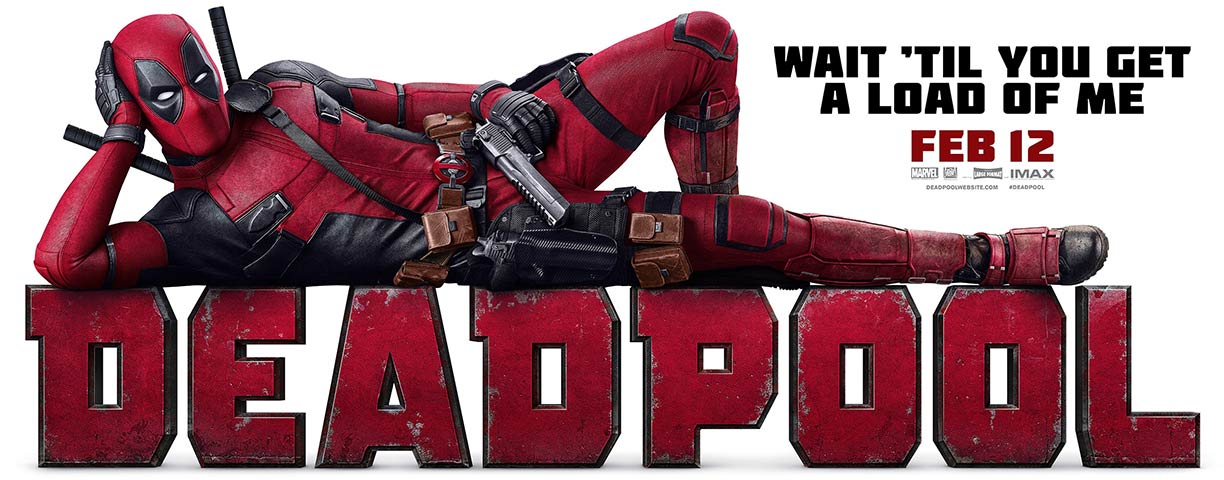
In my point of view, Deadpool broke some of society's stereotypical gender norms. Let me explain how: The film's male protagonist is a sarcastic and witty guy. Everything he does is a step to reunite him with his soulmate, Vanessa, and to get revenge on the guy who ruined his life, Ajax. Deadpool himself is a guy who has feelings and isn't afraid to show them. He admits to having a rough childhood and helps others by keeping them safe from dangerous situations. Although he is pretty heroic, he does not like to be called a Hero. Throughout the film, he jokes around about how handsome some if the bad guys he fights off are. Whether or not he means those comments, someone can assume that Deadpool is pansexual- he doesn't have a gender preference. Also note that he has a softer, lighter voice compared to other male "superheroes" who have deep voices. He made fun of himself in some scenes for not being the "manliest" guy out there. Another note, the posters for the film are humorous and are different from the strong-man-on- the-cover posters: there is one poster where Deadpool is standing in the very pose that we most often see female superheroes in (at just the right angle to display breasts and butt). As has been pointed out numerous times, female superheroes are made to pose in often ridiculous, overtly sexualized, and seriously degrading poses compared to their male counterparts.
Another male character in the movie is Colossus. Colossus, as you can imagine by his name, is a big, mighty man of steel with a soft side. He is respectful of women and shows a lot of rationality and sensitivity before fighting the bad guys- one of those bad guys being Angel Dust who kicks his ass. Check out their fighting scene below:
You can see that at first, Colossus was not up for hitting a woman but once Angel Dust threw the first punch, he didn't hesitate to fight back. During the battle, one of Angel Dust's breasts came out & not only did Colossus give her the heads up, the film itself decided not to reveal her private parts. This was different from other action movies with female characters who are sexualized and other movies where women's bodies are fully exposed compared to men's. Speaking of nudity, Deadpool's penis was exposed during a fighting scene which was a shocker for me since we never see that in movies. But back to the characters- as mentioned and seen, Angel Dust is a powerful, badass woman. She is strong enough to kick Colossus' ass even after getting thrown around a bit. The only downfall with her character is that she tends to be bossed around by Ajax, who is capable enough of fighting his own battles but hey, at least it shows that Angel Dust isn't afraid of anything!


Another badass female character is Negasonic Teenage Warhead who breaks the stereotypes of female superhero characters often seen in other movies. Her shaved head, pierced nose, and conservative costume breakaway from the sexualized female superhero image. As her name gives away, she is a teenager who pays no mind or care to what goes on around her. Her decisions are completely based on her causality. She is also the most powerful character in the movie. She saves the day with her powers which is different from other action movies where the male is usually the one to do all the work and save the day. But in this film, the happy ending wouldn't have happened if it hadn't been for the female superhero, Negasonic Teenage Warhead.
And finally, Vanessa, Wade Wilson's (Deadpool) soulmate. She is the girlfriend character but she breaks so many gender norms that are normally looked down upon. For starters, she isn't the usual long,blonde haired and blue-eyed, damsel. She has short, brown hair and tattoos. She works as a prostitute and isn't ashamed of it at all; and her boyfriend doesn't shame her for it either. Another way that this character breaks from the stereotypical movie girlfriend is that she dominates in some of the sex scenes. In most films, the woman is shown to desire the man and the man sexually pleases the woman with male dominant sexual positions. In Deadpool, Vanessa dominates during the act with woman-on-top and in control positions. Finally, Vanessa is a fighter- emotionally and physically. She had a tough childhood but is confident in the way she lives her adult life and although Wade walked out on her and she thinks he died, she handles her emotions well. At the end of the movie, it seems like Deadpool is going to lose to Ajax until Vanessa stabs Ajax with a sword, saving Deadpool's life. Rather than the male protagonist going back to save the damsel in distress, it's the other way around where the woman saves the man. She fights back and saves the male.
This movie was refreshing to watch as it changes the male comic book character to be funny and pose/act in ways that are often reserved for women and women are portrayed in ways that are often reserved for men. It definitely takes a jab at challenging Hollywood's and society's stereotypes of male and female comic book characters. One question we can ask is: How can other movies that aren't from comic books challenge or break the gender norm stereotypes? Well, we can start off by allowing more female directors and producers to take the lead in Hollywood. In 2015, women comprised only 7% of directors and 23% of producers in Hollywood's top 250 films. These numbers are staggering considering the amount of movies that are made and released. Once we get females to dominate both on-screen and behind the scenes, we might be able to see a change in the way that both men and women are represented in the film category of the media. Both male and female directors and producers can begin to change the way they represent both genders and their norms. By making movies more realistic and relatable with the help of real looking actors, then we might be able to see a change in the way that people see themselves and others.
Word Count: 1,490
Sources:
http://www.imdb.com/title/tt1431045/plotsummary
http://www.merriam-webster.com/dictionary/stereotype
http://variety.com/2015/film/news/women-hollywood-inequality-directors-behind-the-camera-1201626691/
Google Images

No comments:
Post a Comment