Recently, I listened to a podcast titled Colorism by Stuff Mom Never Told You. The podcast discussed a topic that got my attention because colorism is something that I, as a woman of color, have experienced and seen among my own ethnicity and within other groups of people of color. Colorism is a term that isn't as known as racism but is just as important to be aware of. The podcast defined colorism as institutionalized or systemic discrimination against people based on the color (shade or tone) of their skin. Racism is institutionalized or systemic discrimination against people based on their actual or perceived racial status.
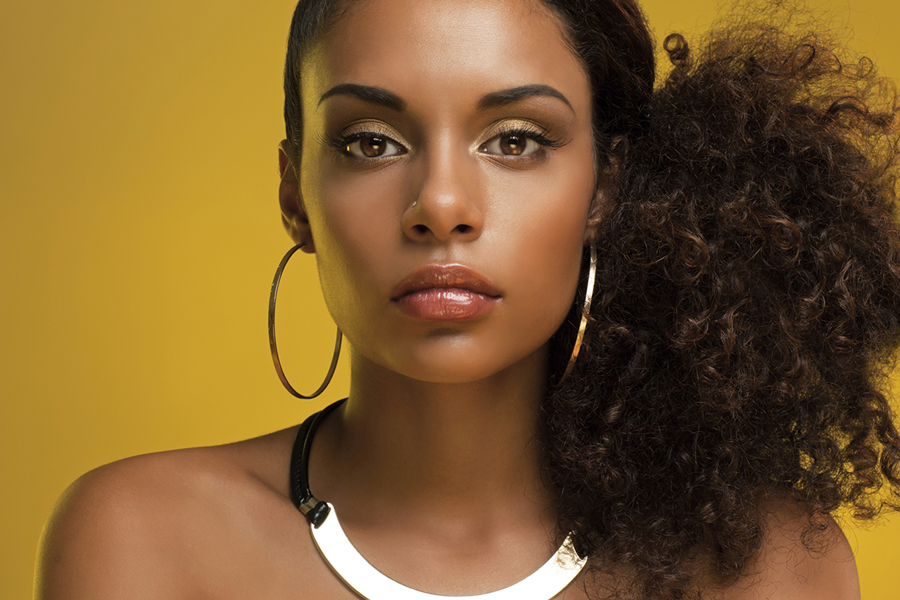
I would like to highlight the fact that people of different races can have the same skin tone.
 |
| Indian woman |
 |
| Middle- Eastern woman |
 |
| African American woman |
And people of the same race can have different skin tones.
 |
| Light skin toned African American |
 |
| Dark skin toned African American |
Check out how this girl below describes colorism among the African American community. She makes really good points when going into detail about the privileges that light skinned Black people have compared to dark skinned Black people. She describes how the stereotypes about the different skin toned groups within the Black community is considered internalized racism.
I have personally experienced colorism within my community. I am Mexican but have lighter skin and green eyes compared to the majority of Mexicans who have darker features. Because of my "white" features, I have experienced many privileges and "fairer" treatment compared to my those who are darker skinned in my community. I grew up receiving comments like "I thought you were white or at least half white when I first met you" and "you look like a white girl" and "you don't have an Spanish accent. You talk like a white girl." I never really saw how rude and ignorant those comments were until I started college and learned more about oppression, racism, colorism, appropriation, and all these other things that minority groups face in our society. I learned to have intellectual conversations regarding these things and it really opened my eyes to how bad comments like that are.
 I remember an experience I had at work, I was assisting a customer, an older white woman, with her transaction. We were having a small conversation as I was ringing up her items when she said, "Raquel Rodriguez? Are you Hispanic or something?" I was caught off guard since that question had nothing to do with the conversation we were having and because I wasn't expecting anyone to question my name and ethnicity. I replied, "Yes. I am Mexican." And she went on to say how if it weren't for my nametag she wouldn't have assumed that I was Mexican since I like white. When I look back to that moment, I think to myself "Why does it matter what I look like? What does she think about people who do "look Mexican"? What does my name have to do with my ethnicity?" I wasn't offended by her question/comment at all as she was delighted to meet someone who looked white but was actually Mexican. I just wonder why it mattered to her. This experience can be seen as an example of colorism because my lighter skin tone projected that I was white and didn't look like a stereotypical Mexican who has darker features. This woman had presumptions about people of color and was surprised to see that I didn't match the images she had in her mind.
I have seen a lot of colorism on Twitter with hashtags like #TeamLightSkin, #TeamDarkSkin, and #TeamBrownSkin. These hashtags are created by people to show what they're attracted to based on a person's skin tone, to show their racial preference, and/or to represent their pride in their own skin tone. In most cases that I have seen, those hashtags have been used as a competition of who is better looking and to make fun of one of the lighter or darker skinned toned groups.
 |
| A meme insinuating that light skinned people view dark skinned people as ugly |
 |
| A meme saying how brown skin people are entertained by the Dark vs. Light skin competition |
For example, Twitter and other social media avenues are used as a platform to share memes and trends like "Dark skins be like..." and "Light skins be like..." Sure, things like that are to be funny and taken light-heartedly but isn't that discrimination of one's own race? These little competitions and trends are so childish to me because instead of uniting and supporting each other as minority groups as a fight against white supremacy, we are falling into the power of larger society and causing separation within our own groups. People look at these memes and trends we make on our own and laugh at us because at the end of the day, we are still Black and Hispanic. The images below show how some people in the Black community realize how ridiculous people look when they follow the #TeamLightSkin vs. #TeamDarkSkin trend. At the end of the day, they are Black and should be proud of that rather than putting each other down.


These hashtag trends on social media perpetuate colorism among people of the same race/ethnicity with different skin tones and will only induce more racism from people of different races/ethnicities. So I'd like to ask:
How can we use social media to help end colorism?
Well, because this is such a complex issue as any other social problem, there is not definitive answer on how to end colorism. But we can start using our resources and do some research and educate ourselves and each other about how institutionalized racism works and how that then leads to institutionalized colorism. We can also find out how colorism affects groups of colored people and how it benefits white supremacy. We can use social media, like Twitter, to start conversations using positive hashtags and getting those to trend so that people can share those and participate in the movement. It takes a lot of courage and honesty. It takes courage to speak on a controversial issue and be ready to receive criticism, personal attacks, loss, and confrontation. It takes honesty to share hurtful experiences, insecurities, and admitting cases of perpetuating colorism. We need stop projecting our personal problems onto others. Colorism is a communal, societal problem and we need to start with ourselves to be able to pass it on to others. We need to start with self-love and acceptance and then move up from there to teach young people of color to love themselves and their differently hued brothers and sisters. Social media can help get us started on all of the above by sharing and spreading positivity for everyone to see.
Word count: 1131

No comments:
Post a Comment