Video games as a whole form of media, also have an ideology that encompasses all within it. Of course the more coverage an ideology has the more basic it becomes in order to accommodate all that is within it. Ideologies change over time though, and the ideology of video games is currently experiencing a change, or at least the opportunity for one. To examine this opportunity for change, I'll be looking into a controversy that occurred for the game Overwatch just two months before its release.

Overwatch is a video game produced by Blizzard. Blizzard is a large triple "A" company well known for their other game World of Warcraft. Blizzard is regarding as putting out very good and fully fleshed out games, as they don't put them out very often. Before Overwatch's official release, it went through extensive testing, both internally within Blizzard and externally with the community of players. Two months before its release Overwatch was in a closed beta, meaning that a select number of people were sent an email inviting them to test Overwatch. This test was not open to the public, or could it simply be joined as it required a person invite email and code from Blizzard themselves. Generally during a closed beta period of a game's testing, the participants are under a Non-Disclosure Agreement or NDA which prohibits them from showing, reviewing, or talking about the game extensively. For Overwatch though Blizzard allowed the participants to stream and talk about the game, and simply asked that they not review it as a finished product, and stressed that it was a testing period. This was a highly unusual move in the game industry that went over well with its audience.
During this testing period a Blizzard forum user by the name a Flipp made a post relating to Overwatch. This forum serves as a public place for discussion of Blizzard games. On one hand this post commented that Overwatch had a brilliant cast of female characters, but its main content was about the oversexualization of one character, Tracer.
Flipp argued that while Overwatch had a wonderful cast of female characters and looked to stay true to that, there was one victory pose for Tracer that was a blemish upon this idea. Victory poses in Overwatch are customizable vanity pose options that are shown when your team wins a match. Flipp's problem was with an over the shoulder victory pose for Tracer. Flipp thought that it oversexualized her and diminished her to a sexual object. Doing so Flipp argues ruins Overwatch's work towards making a good cast of female character.

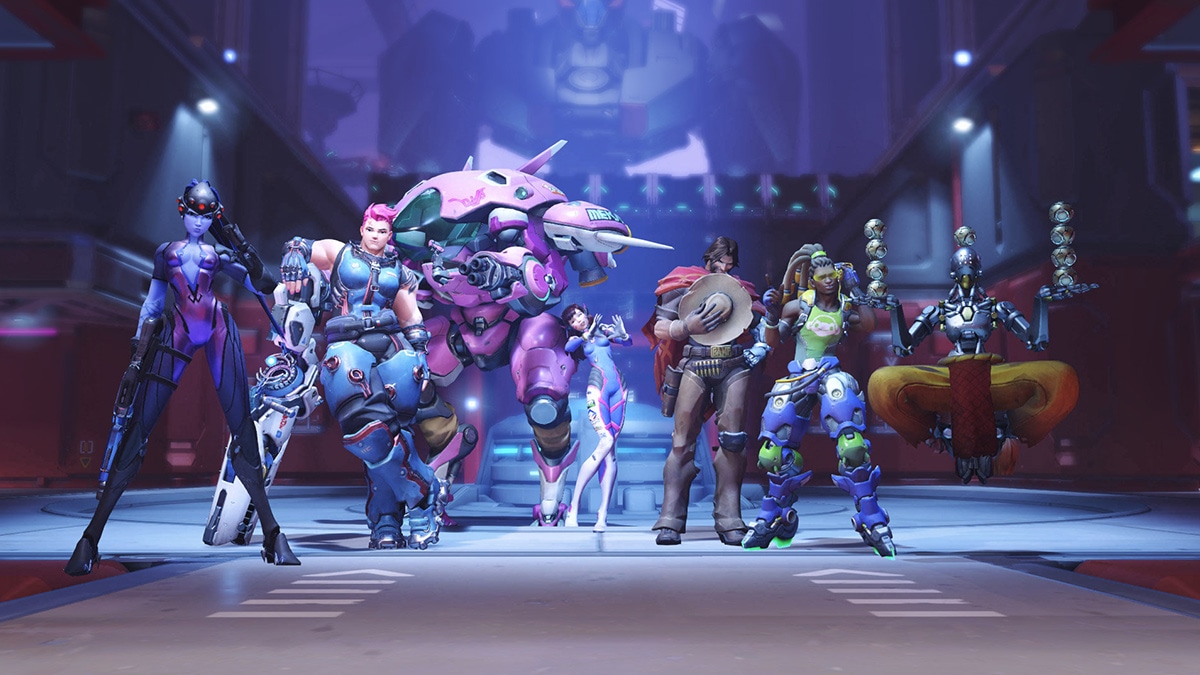
Initially this argument can appear to be concerned only and purely with the oversexualization of characters within Overwatch. However, as use Flipp detailed in response to the question of others, the concern is specifically about Tracer. In actuality the concern is that the over the shoulder pose of Tracer and its oversexualization nature is out of line with Tracer's personality. Many of the other female charactrers within Overwatch, if not all, are sexualized in some way. Use Flipp's concern is not that though, but rather that such sexualization or sexual characteristics be aligned with that characters personality. Widow, another female character in Overwatch, is highly sexualized and has a similar pose to Tracer's over the shoulder pose. User Flipp has no problem with Widow's oversexualization though because it is within her personality and character.
This controversy got a lot of people arguing and ranting. It inspired satirical videos and became a full fledged heated debate. All of it shows a change or at the very least the possibility for change of the ideology behind video games. Flipp and many others were fine with the sexulization of characters within video games. Others go a step further and want or need characters to be overly sexualized. To a point this could be said about all video games. I would be hard pressed to find a game that had all characters depicted as having realistic body weights or images.
Most games currently depict their characters as some form of the ideal. Men look to be carved from stone, covered in rippling muscle and could break boulders with their chiseled chins. Women look slim, and from head to toe are a combination of sexual curves that drag the eye. Such depictions aren't unusual, not for video games or media as a whole. Within video games now there is a chance for changing what allows that depiction to be retained though. Flipp argues that it needs to be tied to the personality of the character.
Currently and along the history of video games, no such reasoning was needed. Characters were oversexualized and/or given the ideal image not because it fit their personality, but because it could be done. Because it showed in game sales that such depictions were what people wanted. People want them so bad that they even go above and beyond the role of consumer.
Skyrim is a well known game by Bethesda Studios that came out in November of 2011. Loved for having an immense open world to explore, and unique first person perspective capabilities, has become home to a large modding community. Modding is when a consumer creates content for a game, and is able to input it into the game. Skyrim's modding community is one big reason as to why the game has stayed so prevalent for five years. Right now there are a host of mods to make the characters look better, have high detailed skin textures, better hair, better ingame folliage and lanscapes, 4k resolution textures, and more. Oh by the way that can include making everyone naked. Or player created sexualized races like the succubus. Some people made a mod that adds in butt and boob jiggle. These be but the surface of what the community has made to mod the game of skyrim and increase it both in looks, and also gameplay. All of this done by choice of every individual. Modders make the mods but no one else is required to use them. Every individual chooses for themselves which mods they would like to run their game with.
These consumers choose, and for Skyrim go far out of their way, to overly sexualize their games. Its what they want.
The controversy within Overwatch regarding Tracer shows how some people, and perhaps the industry of video games, currently or could justify sexualization within the game. To have the personality of the character come first, adds a entry requirement and puts the character, and inadvertently the game world, first and foremost instead of the sexualization. Its a move from sexualizing our games simply because we can to sexualizing that which would be sexual. Widow from Overwatch is an assassin and personality wise flaunts her sexual nature to a mild degree, so why not have her show that as well. Tracer however is a fun, spunky character who likes to laugh. However she is also an adult at the age of 24, and lore of Overwatch (lore translating is a part of her person, or is it a possibility and alright to depict?
A better quiestion is why should people want sexual content to be grounded in the realistically in content? Should the sexualiztion of material continue as it is, done wherever possible simply because it is possible, or should it be restricted? Flipp wants such sexualizations restricted to when it realistically is a part of the character's personality, when there is justification that the character would be or do as such. If left unchecked the over sexualiztion of content does set unreasonable expectations in people. Would tying sexualiztion to a substantial reason help redefine such expectations? At the very least it would set the expectations to also take into account the groundings or anchor for sexualized content. This is an examination of a turn in the industry of video games, and perhaps media at large. Do people want their consumption of media and products to be overly sexualized simply because it looks better, or do people want such sexualization to have an anchor that is more grounded and substantial that "because we could".
Word Count: 1472




No comments:
Post a Comment