If there’s one thing I’ve learned from watching too much
television and movies, it’s that if the disparity between men and women are so
great that there’s a test to determine if two women in a scene could even hold a
conversation on their own without talking about anything relating to another man,
the struggle has to be real.

This evaluation is called the Bechdel test, coined by Alison
Bechdel, a cartoonist and bestseller author of Fun House (2006) and Are
Your My Mother? (2012) Bechdel came up with the term in some of her 1980s comic strips
satirizing Hollywood’s depiction of women in movie roles.
It’s apparent right off the bat even in 2015 that gender plays an enormous part
in our everyday lives. Cristen Conger and Caroline Ervin are hosts to the
podcast “Stuff Mom Never Told You,” in which they explore the vast landscape of
gender issues that plague our society including the aforementioned Bechdel test.
There are three factors that determine whether a movie or TV
show can pass the Bechdel test: (1) there must be two named women in the movie (2) they must be talking to one another for
let’s say at least 60 seconds and (3) that conversation must not involve a male.
Simple right? Well if you asked me, I don’t think I can personally name you at
least five movies that came out in the last few years that can actually pass
the Bechdel test and I’ve seen a ton of movies.
This clip from Friends embodies a decent albeit microcosm representation of how much our society
stereotypes men and women characterizing them into having specific gender traits.
Some erroneous behaviors include how Courtney Cox’s character Monica reluctantly
has OCD (obsessive compulsive disorder) and displays how spick-and-span and hygienic
women are widely perceived or how Jennifer Aniston’s role as Rachel evidently
makes her out to be the tried and true version of a “girly-girl” with her character’s
emphasis on wardrobe and fashion.
Conger and Ervin even list a few movies from an article detailing
some popular box office movies that couldn’t pass the test like Identity Thief
starring Melissa McCarthy and Jason Bateman, Oblivion, Mud, Jack the Giant
Slayer, and Hangover 3. And let’s not forget some older films like Star Wars, The
Social Network, Avatar and Lord of the Rings, all of which also did not pass
the Bechdel test. However, it’s not all doom and gloom for the women in
Hollywood, Conger and Ervin do include some well-known titles that do pass the
test such as Juno, Titanic, Clueless, When Harry Met Sally and Bridesmaids. The
Bechdel test proves quite useful even by today’s standards of how one-sided our
media portrays women (especially race, but that’s a whole other can of worms
worth elaborating another time). For a full list movies that did and didn't pass the Bechdel test you can find them here.
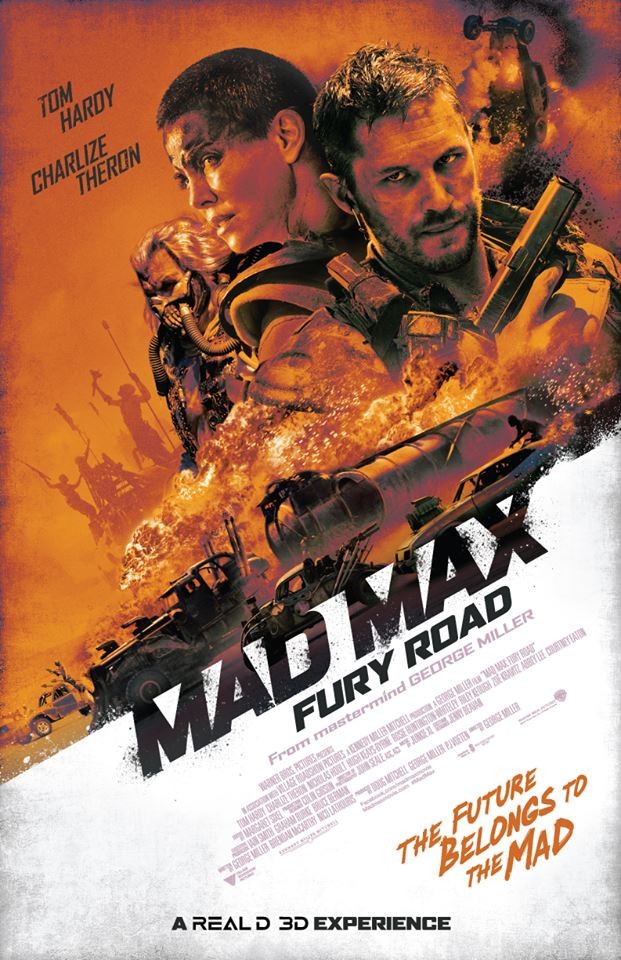
Quoted by some as “the most feminist movie of the year,” I want to talk about Mad Max: Fury Road, the reboot to 1979’s post-apocalyptic
dystopian film by George Miller. This movie features explosive car chases and plenty of
gore and violence; if you’ve ever seen the trailers for this film they practically
scream male masculinity. Obviously marketed to be a testosterone fueled guys-night-out
flick, it actually in fact does pass the Bechdel test if I recall.

Don’t let the name fool you, the story does center on a hero named Max, but an equally important (or arguably more important) character is Furiosa
played by Charlize Theron, who along with the other women shown in the
film aren’t as nearly portrayed as the stereotypical one-dimensional female characters
that many action movies embrace. They certainly have their own reasons and
motivations for the way they act, but more importantly that their personalities aren’t just superimposed
onto them as seen throughout so many of our Hollywood blockbuster hits that fail the test miserably.

The film pokes at a well-known movie trope that has been
used throughout pop culture and especially in action movies and that is the “femme
fatale”. No, I'm not talking about the 80s female rock group, but as the French term for "fatal woman". It’s the description for a dangerous seductress
who knows how to kick ass just as well as any man could, yet almost always
fails the Bechdel test in movies, because her motives usually involve using her
body in some way as sex appeal to seduce and use men (or sometimes women) to get what
she wants.

In Mad Max: Fury Road all the body parts are up for grabs and
both men and women must fend for how much an arm or leg might cost them. Human limbs are seen as a grim source for blood power-ups or to supply rejuvenating breast-milk, but we too treat our body parts (especially belonging
to women) as simple commodities.The film’s
setting may involve a post-apocalyptic dystopia, but it’s not a too far off
parallel of our own society when we think about how much value we place in the
size of our biceps, breasts and butts. The only difference is that we want them to
be displayed and envied. The “femme fatale” trope has been overdone and quite
frankly if you ever start hearing from male viewers that they’re getting sick and tired
of seeing this same image of unauthentic female characters, I can’t even
imagine the frustration women (especially teenage girls) must feel constantly bombarded
by this misrepresentation of women in the media. Just take a look at any music video ever:
“Booty” by Jennifer Lopez ft. Iggy Azeala (2014)
“All About The Bass” by Meghan Trainor (2014)
“Anaconda” by Nicki Minaj (2014)
“TWERKIT” by Busta Rhymes ft. Nicki Minaj (2013)
“Salt Shaker” by Ying Yang Twins ft. Lil Jon and The East
Side Boyz (2002)
“Bootylicious” Destiny’s Child (2001)
“Baby Got Back” Sir Mix-a-Lot (1992)
It's a little overwhelming to say the least and for a large portion of our pop culture, this case especially rings
true for a majority of women. Just because a woman dresses up in tight leather-clad spandex
and knows martial arts doesn’t make her a “strong female character” by any
stretch or any more than the plethora of clichéd female rom-com roles in Hollywood
movies that for sure didn't pass the Bechdel test. It’s a shame though that our
society faces an unfortunate scarcity of realistic women and why so many female
characters are pigeonholed to function only as a romantic interest or to
attract hormone-crazed teenage boys to buy more movie tickets by objectifying women
as anything other than objects for sexual desire.
It can often prove mind-bogglingly difficult to peel back the layers of our seemingly stagnant
gender issues here in the U.S. of A, where we so pride ourselves as a nation of
freedom and equality for all citizens. Yet if we’re continually failing a test
in film and television that measures how two women cannot talk about anything other than another man,
it doesn’t seem like we’re going to make social reform happen anytime soon. We’ve
come to tolerate “girls being girls” and “boys being boys” so much that it’s practically
ingrained in our very being. We’re spoon-fed these notions of femininity and
masculinity even before we’re born with baby showers and crib designs.
For some of us, it may have much to do with
how we are raised at home; I mean it’s only logical that our own personal upbringing
is how we come to experience what to place meaning to and how we learn to understand
ourselves and others. However contrary to popular belief, ignorance is not
bliss, ignorance is just plain ignorance, especially with regards towards the gender issue we so hate to talk about.
So does it just boil down to a matter of money? Surely, if I was a producer backing a movie, I'm going to expect profitable returns and sex clearly sells, so why not milk as much of this cash-cow as we possibly can? Or could we save the younger generation a ton of
heartbreak and confusion if we not only had more movies that passed the Bechdel test, but maybe more conversations on these gender issues, so that those darned movie makers stopped believing that what all women talked about these days is how much a guy is affecting their lives.
Word Count: 1457

No comments:
Post a Comment