Video games like any form of media convey certain ideas, understandings, and perspectives on a range of topics. All of which ties back to the ideology of the game. Ideology being the system of ideas and ideals. Within the video game industry, a large variety of ideologies exist. This is because while many video game genres have their own ideology, each game has its own ideology as well. Within a single video game genre there can be a lot of similar messages rooted in similar ideologies but looking at each game on its own, nuances can be found that show small or drastic differences between two games within the same genre.
Video games as a whole form of media, also have an ideology that encompasses all within it. Of course the more coverage an ideology has the more basic it becomes in order to accommodate all that is within it. Ideologies change over time though, and the ideology of video games is currently experiencing a change, or at least the opportunity for one. To examine this opportunity for change, I'll be looking into a controversy that occurred for the game Overwatch just two months before its release.
Overwatch is a video game produced by Blizzard. Blizzard is a large triple "A" company well known for their other game World of Warcraft. Blizzard is regarding as putting out very good and fully fleshed out games, as they don't put them out very often. Before Overwatch's official release, it went through extensive testing, both internally within Blizzard and externally with the community of players. Two months before its release Overwatch was in a closed beta, meaning that a select number of people were sent an email inviting them to test Overwatch. This test was not open to the public, or could it simply be joined as it required a person invite email and code from Blizzard themselves. Generally during a closed beta period of a game's testing, the participants are under a Non-Disclosure Agreement or NDA which prohibits them from showing, reviewing, or talking about the game extensively. For Overwatch though Blizzard allowed the participants to stream and talk about the game, and simply asked that they not review it as a finished product, and stressed that it was a testing period. This was a highly unusual move in the game industry that went over well with its audience.
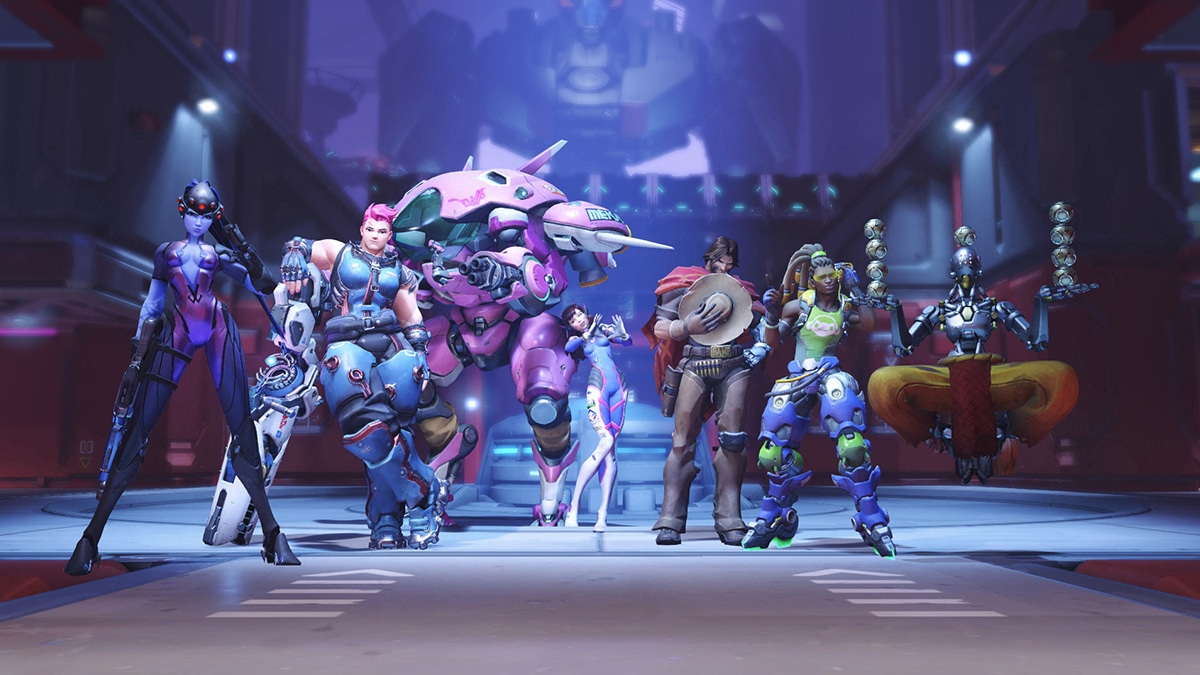
During this testing period a Blizzard forum user by the name a Flipp made a post relating to Overwatch. This forum serves as a public place for discussion of Blizzard games. On one hand this post commented that Overwatch had a brilliant cast of female characters, but its main content was about the oversexualization of one character, Tracer.
Flipp argued that while Overwatch had a wonderful cast of female characters and looked to stay true to that, there was one victory pose for Tracer that was a blemish upon this idea. Victory poses in Overwatch are customizable vanity pose options that are shown when your team wins a match. Flipp's problem was with an over the shoulder victory pose for Tracer. Flipp thought that it oversexualized her and diminished her to a sexual object. Doing so Flipp argues ruins Overwatch's work towards making a good cast of female character.
Initially this argument can appear to be concerned only and purely with the oversexualization of characters within Overwatch. However, as use Flipp detailed in response to the question of others, the concern is specifically about Tracer. In actuality the concern is that the over the shoulder pose of Tracer and its oversexualization nature is out of line with Tracer's personality. Many of the other female charactrers within Overwatch, if not all, are sexualized in some way. Use Flipp's concern is not that though, but rather that such sexualization or sexual characteristics be aligned with that characters personality. Widow, another female character in Overwatch, is highly sexualized and has a similar pose to Tracer's over the shoulder pose. User Flipp has no problem with Widow's oversexualization though because it is within her personality and character.
This controversy got a lot of people arguing and ranting. It inspired satirical videos and became a full fledged heated debate. All of it shows a change or at the very least the possibility for change of the ideology behind video games. Flipp and many others were fine with the sexulization of characters within video games. Others go a step further and want or need characters to be overly sexualized. To a point this could be said about all video games. I would be hard pressed to find a game that had all characters depicted as having realistic body weights or images.
Most games currently depict their characters as some form of the ideal. Men look to be carved from stone, covered in rippling muscle and could break boulders with their chiseled chins. Women look slim, and from head to toe are a combination of sexual curves that drag the eye. Such depictions aren't unusual, not for video games or media as a whole. Within video games now there is a chance for changing what allows that depiction to be retained though. Flipp argues that it needs to be tied to the personality of the character.
Currently and along the history of video games, no such reasoning was needed. Characters were oversexualized and/or given the ideal image not because it fit their personality, but because it could be done. Because it showed in game sales that such depictions were what people wanted. People want them so bad that they even go above and beyond the role of consumer.
Skyrim is a well known game by Bethesda Studios that came out in November of 2011. Loved for having an immense open world to explore, and unique first person perspective capabilities, has become home to a large modding community. Modding is when a consumer creates content for a game, and is able to input it into the game. Skyrim's modding community is one big reason as to why the game has stayed so prevalent for five years. Right now there are a host of mods to make the characters look better, have high detailed skin textures, better hair, better ingame folliage and lanscapes, 4k resolution textures, and more. Oh by the way that can include making everyone naked. Or player created sexualized races like the succubus. Some people made a mod that adds in butt and boob jiggle. These be but the surface of what the community has made to mod the game of skyrim and increase it both in looks, and also gameplay. All of this done by choice of every individual. Modders make the mods but no one else is required to use them. Every individual chooses for themselves which mods they would like to run their game with.
These consumers choose, and for Skyrim go far out of their way, to overly sexualize their games. Its what they want.
The controversy within Overwatch regarding Tracer shows how some people, and perhaps the industry of video games, currently or could justify sexualization within the game. To have the personality of the character come first, adds a entry requirement and puts the character, and inadvertently the game world, first and foremost instead of the sexualization. Its a move from sexualizing our games simply because we can to sexualizing that which would be sexual. Widow from Overwatch is an assassin and personality wise flaunts her sexual nature to a mild degree, so why not have her show that as well. Tracer however is a fun, spunky character who likes to laugh. However she is also an adult at the age of 24, and lore of Overwatch (lore translating is a part of her person, or is it a possibility and alright to depict?
A better quiestion is why should people want sexual content to be grounded in the realistically in content? Should the sexualiztion of material continue as it is, done wherever possible simply because it is possible, or should it be restricted? Flipp wants such sexualizations restricted to when it realistically is a part of the character's personality, when there is justification that the character would be or do as such. If left unchecked the over sexualiztion of content does set unreasonable expectations in people. Would tying sexualiztion to a substantial reason help redefine such expectations? At the very least it would set the expectations to also take into account the groundings or anchor for sexualized content. This is an examination of a turn in the industry of video games, and perhaps media at large. Do people want their consumption of media and products to be overly sexualized simply because it looks better, or do people want such sexualization to have an anchor that is more grounded and substantial that "because we could".
Word Count: 1472
Monday, June 27, 2016
#TeamColorism?
Recently, I listened to a podcast titled Colorism by Stuff Mom Never Told You. The podcast discussed a topic that got my attention because colorism is something that I, as a woman of color, have experienced and seen among my own ethnicity and within other groups of people of color. Colorism is a term that isn't as known as racism but is just as important to be aware of. The podcast defined colorism as institutionalized or systemic discrimination against people based on the color (shade or tone) of their skin. Racism is institutionalized or systemic discrimination against people based on their actual or perceived racial status.
I would like to highlight the fact that people of different races can have the same skin tone.
![]() |
| Indian woman |
| Middle- Eastern woman |
| African American woman |
And people of the same race can have different skin tones.
| Light skin toned African American |
| Dark skin toned African American |
Check out how this girl below describes colorism among the African American community. She makes really good points when going into detail about the privileges that light skinned Black people have compared to dark skinned Black people. She describes how the stereotypes about the different skin toned groups within the Black community is considered internalized racism.
I have personally experienced colorism within my community. I am Mexican but have lighter skin and green eyes compared to the majority of Mexicans who have darker features. Because of my "white" features, I have experienced many privileges and "fairer" treatment compared to my those who are darker skinned in my community. I grew up receiving comments like "I thought you were white or at least half white when I first met you" and "you look like a white girl" and "you don't have an Spanish accent. You talk like a white girl." I never really saw how rude and ignorant those comments were until I started college and learned more about oppression, racism, colorism, appropriation, and all these other things that minority groups face in our society. I learned to have intellectual conversations regarding these things and it really opened my eyes to how bad comments like that are.
I have seen a lot of colorism on Twitter with hashtags like #TeamLightSkin, #TeamDarkSkin, and #TeamBrownSkin. These hashtags are created by people to show what they're attracted to based on a person's skin tone, to show their racial preference, and/or to represent their pride in their own skin tone. In most cases that I have seen, those hashtags have been used as a competition of who is better looking and to make fun of one of the lighter or darker skinned toned groups.
| A meme insinuating that light skinned people view dark skinned people as ugly |
![]() |
| A meme saying how brown skin people are entertained by the Dark vs. Light skin competition |
For example, Twitter and other social media avenues are used as a platform to share memes and trends like "Dark skins be like..." and "Light skins be like..." Sure, things like that are to be funny and taken light-heartedly but isn't that discrimination of one's own race? These little competitions and trends are so childish to me because instead of uniting and supporting each other as minority groups as a fight against white supremacy, we are falling into the power of larger society and causing separation within our own groups. People look at these memes and trends we make on our own and laugh at us because at the end of the day, we are still Black and Hispanic. The images below show how some people in the Black community realize how ridiculous people look when they follow the #TeamLightSkin vs. #TeamDarkSkin trend. At the end of the day, they are Black and should be proud of that rather than putting each other down.
These hashtag trends on social media perpetuate colorism among people of the same race/ethnicity with different skin tones and will only induce more racism from people of different races/ethnicities. So I'd like to ask:
How can we use social media to help end colorism?
Well, because this is such a complex issue as any other social problem, there is not definitive answer on how to end colorism. But we can start using our resources and do some research and educate ourselves and each other about how institutionalized racism works and how that then leads to institutionalized colorism. We can also find out how colorism affects groups of colored people and how it benefits white supremacy. We can use social media, like Twitter, to start conversations using positive hashtags and getting those to trend so that people can share those and participate in the movement. It takes a lot of courage and honesty. It takes courage to speak on a controversial issue and be ready to receive criticism, personal attacks, loss, and confrontation. It takes honesty to share hurtful experiences, insecurities, and admitting cases of perpetuating colorism. We need stop projecting our personal problems onto others. Colorism is a communal, societal problem and we need to start with ourselves to be able to pass it on to others. We need to start with self-love and acceptance and then move up from there to teach young people of color to love themselves and their differently hued brothers and sisters. Social media can help get us started on all of the above by sharing and spreading positivity for everyone to see.
Word count: 1131
Colorism Within Victoria's Secret
If I were to tell you the girl seen to the right, Jasmine Tookes, was a Victoria's Secret model I doubt you would be very surprised. I will admit, you may be a bit taken aback because you are accustomed to seeing spray tanned girls with cascading blonde beach waves and light colored eyes in relation to Victoria's Secret. Now, what if I told you the girl featured on the runway photo below was the same girl? I found this stark contrast very shocking. It turns out Victoria Secret has historically struggled in the diversity area in general, nevertheless withholding whitewashing their very limited number of women of color. Even worse, I have read over and over these women who dream of becoming supermodels say they have been told during casting things along the lines of "we already have a black girl, we don't need another."
People questioning the lack in representation of color has been ongoing for at least half a decade now. I found an article from 5 years ago asking where the black women were in relation to the Victoria's Secret fashion show of 2011. The author stated "Puerto Rican and black model Joan Smalls and Brazilian beauty Lais Ribeiro added color to the show but beyond that, the scene was a sea of blondes." If you notice the casting of the current angels you can see the cast is slowly showing more diversity but the majority of models are still light-skinned.
My question is:
Why is the fashion industry having such a tough time embracing the beauty of dark skin models?
When speaking of beautiful black models we cannot forget about Tyra Banks who was the first black women to appear in GQ, Sports Illustrated, as well as the Victoria's Secret catalog and runway.
A quick Tyra bio is found below:
Personally, Tyra has always been my role model. I've watched every one of her America's Next Top Model seasons as well as all her talk show episodes. Two episodes that came to mind when doing my research on colorism were the following which speak on the struggle these two women have faced in loving who they are despite not always being satisfied with the color of their skin:
These short clips break my heart. These gorgeous women are underrepresented and therefore feel like outcasts. The woman in the first video admits to burning her face by attempting to use cleaning bleach to lighten her skin. Even more devastating is how she states the people who say not to bleach your skin because it is unhealthy do not understand the underlying factors that lead to that severe point of desperation. As a supermodel, Tyra has also had to deal with having her skin edited to be considered attractive to the public eye, which she discussed on her talk show.
![]() |
| These photos put together of Tyra Banks shows the extremes of skin color editing |
In the second video above I can only imagine how hard it would be to be consistently asked "why are you so dark?" That really is a question that does not need to be asked. She cannot change it, it is the way she is, so uttering those words only dishearten her more. It makes me so sad when she says "if I were light skinned would my life be different?" It disgusts me when she says people would say she was only such a fast runner because she became accustom to being chased by lions.
I love when Tyra says it is imperative for the media to represent all kinds of beauty because young girls who resemble those represented will look up to them and think "I am beautiful." I believe not only would the women like the ones represented in these videos feel more accepted if more dark skinned women of color were prevalent in the media, but also, the terrible people who have made them feel so bad about themselves would most likely not think of them as such outsiders if they too saw more representation of people like these women in their everyday life.
The video below is a bit long but combines different episodes of the Tyra Show that have started a discussion in attempt to deal with the colorism epidemic.
Leomie Anderson, seen below, also spoke on the phenomena in this article. She said in an interview with the BBC, she feels that there has been a lot of improvement in the industry with the use of black models, but she would definitely say that it has a long way to go - especially with regards to shade. 44 models walked the VS runway in 2015, and only eight were black, counting Anderson.
![]() |
| Shown above is Victoria's Secret model Leomie Anderson |
2015 also marked the first year that a model wore her natural hair on the runway. Maria Borges (seen in the video below) had worn fake hair for the fashion show in the past but decided to rock her natural look this year and received a lot of praise for doing so. People in 200 countries watch the Victoria Secret fashion show each year. Isn't it time to start expanding the marketing campaign of the brand? I feel as though internet users becoming so excited about this deference from the norm shows that the customer is ready for change. We want to see people that represent the range of people who buy the VS products.
![]() |
| Leomie Anderson and Maria Borges, as well as two other dark skinned beauties, backstage at the VS fashion show |
While dark skinned women are making a slow progress towards acceptance in the mainstream, Huffington Post mentions that there has yet to be an Asian Victoria Secret angel chosen. We have at least seen some Asian representation starting at the 2009 fashion show with Liu Wen.
I find the argument of colorism interesting when it comes to Asian women in the VS fashion shows because a lot of the other girls who are not of Asian descent share similar skin tones, however we see Asian girls are just as much a minority, if not more, on the runway as the dark skinned beauties which makes me suspect those in charge of casting would favor the blond of the similar tone of skin. Looking at the photos of the Asian girls who have been cast you can see there seems to be a preference for lighter skin. I do not believe it is only Victoria Secret that is favoring light-skinned more all-American look girls but rather the entire fashion industry, whether consciously or not, which is making it hard for those who have done the same amount of work, but are women of color, receive the same amount of recognition.
![]() |
| In 2009, Liu Wen became the first Asian beauty to walk the infamous runway |
![]() |
| Model Shu Pei Qin during the 2012 VS fashion show |
![]() |
| Model Sui He during the 2013 VS fashion show |
Shu Pei Qin has done more than her fair share of work in the industry yet somehow is still less represented than her blond counterparts like Candice Swanepoel. Sui He, is another notable VS model that not many people seem to talk about, despite her being a 5 year veteran of the VS fashion show.
We also cannot forget about the beauty Ming XI who has walked for many major designers, like Chanel (upwards of a dozen times). I think Victoria's Secret should have made her an Angel right after the fashion show before they lost their chance!
![]() |
| Ming Xi who walked for VS in 2013 and 2014 |
Despite the Huffington Post article mentioned above which disagrees with this following statement, I think we need an Asian angel stat! I see the Huffington Post's point but I also know the majority of girls, regardless of race, wear bras and panties. Even if no one else sees them in their VS underwear, every girl deserves to feel confident and sexy. I do not believe any group should be over or underrepresented. I would like to even the playing field and create a beautiful set of diverse women not only for the 2017 fashion show and beyond but also the chosen angels for all the years to come.
Word Count: 1375
Friday, June 24, 2016
The ideology of the
Rom Com; manage your expectations
Hollywood through the hegemony of digital
media delivers the fantastical ideology of the Romantic Comedy. These movies deliver, often to hilarious
affect, the situations of couples as they progress through a relationship. I enjoy a great deal of these movies and can
be found laughing uncontrollably, with my wife, at some of the ridiculous
situations that these movie couples struggle through. This genre provides a great deal of
entertainment and joy, and as a side note, is one of my favorite movie genres
right behind almost anything with zombies.
However, there is a concern with these types of movies and particularly
so for younger unmarried viewers which they should be aware of. What dangers say you? To which I respond with another question, do these types of
movies build up unrealistic fantasy beliefs about relationship conquest, weddings,
and what marriage is?
Pay attention as this IS a test, and although you can’t see
or hear it, I’m stomping my foot on the floor and yelling yes they do.
Warning, since I
am a guy this blog is written from the viewpoint of a heterosexual guy, but I
think the information is universal to the sexes.
My friends let’s start with what Ideology is. Ideology, in the world according to Uncle Ron
and since you’re reading my blog YOU ARE
in my world buwhahahahaha, is when people mistake the odd for the norm. In other words when we take an odd ball situation/success for an everyday Joe’s reality and attribute that to being the norm. Ideology has three parts: it appears to be natural, historical or a product of evolution, and eternal (seemingly forever). People tend to internalize Rom Com situations as normal because they do appear natural, they recur through time or generations, and these hard-won romances seem to last forever. This is where the danger begins, and as my good friend Austin Powers said, “Danger is my middle name.”
What’s wrong with this Rom Com ideology? My friends, it’s definitely ok to laugh and
enjoy this film genre, and I’m not trying to dissuade you from watching them,
but a person does need to watch them with a “grain of salt” so to speak.
I think most of us realize these Rom Coms are
pretty fantastical, but we must get into Pop culture and cultivation theory a
bit here. Popular culture is the
consumable and disposable ideas, fashions, fads, tastes, music of the day. Pop culture is a means of engaging in
everyday life; it’s how we interact with the world. This is where cultivation theory comes in,
which generally focuses on the cumulative influence of consuming media. In other words what we consume in the way of
media influences, over time, our thoughts and beliefs. These thoughts and beliefs affect our views
on violence, fashion, what beauty is, what’s acceptable and what’s not, along
with how relationships are “supposed” to be.
Why this genre can be harmful. One fantastical Rom Com situation involves
the classic “underdog story.” We as U.S. Americans typically love a good underdog
story, and in relation to my blog’s topic, we love to see the guy get the girl
that is way out of his league. This
underdog story is evident in the movie Hitch in which the “date doctor”
played by Will Smith says that any man has the chance to sweep any woman off her
feet.
While it’s
true that any guy has the chance to sweep any woman off her feet, the odds
are not in the average Joe’s favor when trying to get the girl way out of his
league.
In the movie Hitch,
Albert, played by Kevin James, a mild mannered financial adviser tries to win
the heart of an heiress of epic proportions.
She is beautiful, sexy, and rich while Albert is dumpy, clumsy, has terrible
dance moves like mine, and is nowhere near as affluent as she is. Predictably he gets the girl, but this is not
what the average man should expect.
There are a couple of sayings that relate to this a bit namely “opposites
attract.” Come on, you know the good
girl/bad boy thing. This is where
ideology comes in being that some “bad boys” end up with “good girls,” but this
is not the norm and certainly is not for sustained relationships. Although a fling here and there does occur,
more typically the saying “birds of a feather flock together” is more of a
reality. Typically, people of the same
type beauty level, social status, education level, etc. tend to become couples as
they have more in common which is important to sustained relationships. It’s just that people should not go into relationship
conquest mode with the expectation that they’ll be successful shooting
way higher than they should.
What’s
important here is the word “expectation.”
I learned a long time ago to ask for what I want and let somebody else
say no. In other words, by all means
shoot for the stars in whom you’d like to start a relationship with just don’t EXPECT
success in this particular underdog way.
It’s just unrealistic expectation that we’re talking about here and in
the case of Hitch with the character of Albert, the odds are after
starting to date they likely wouldn’t have much in common to go much past the
first date.
Lets take a look at some relationship myths: Expectations vs. reality as written by Rani St. Pucchi a relationship expert: Relationship Myths: Expectations vs. Reality
Let’s get into arguments now and the expectations
of them portrayed in Rom Coms. I’m going
to shock you here with a statement, if you’re in a real relationship you will
fight. The idea portrayed in some Rom
Coms is that couples are always sweet, gentle, and always get along. That is the most fantastical fantasy of all. Ladies and Gents if you’re in a real
relationship you will fight so don’t get your feelings crushed when your expectation
of relationship bliss hits some rough spots.
In Rom Coms couples do get into fights, but nearly always overcome and
end up getting married. Check out this
one from the movie Just Friends.
The idea in the Rom Com genre being that
couples always over come and get back together, but again this is not
reality. Sorry to say it folks but some
fights end relationships. However, with
that said, normally relationships end over a variety of issues rather than a
single argument. At least one Rom Com depicts this reality, the
break up.
Sadly for the couple in this movie things don’t
work out.
Another unrealistic situation portrayed by
many Rom Coms is the fairy tale wedding.
Before we even get there the predictability of the Rom Com is, well, unparalleled. The predictive outcome, or end goal, is the
wedding. I think you’ll find out my
friends, if you haven’t already, that most relationships you’re involved in won’t
make it to the alter even if you want it to.
In society many people talk about finding the “one”, but in reality
there are many “ones” that will fit nicely into that category. In other words there is more than one “the one”
out there for each of us. Most people
will go through several “the ones” before finding the actual “one.” There are lots of Princesses and Knights in shining
armor out there. Therefore don’t expect, there’s that word again, to be hit in the
head with a silver sledge hammer or shot in the butt by Cupid when you meet
someone to be able to tell who “the one” is.
Now back to weddings. In the Rom
Com couples struggle through a myriad of situations to arrive at the end state
of a wedding. Fine, ok their getting
married, but have you noticed how extravagant most of those movie weddings tend
to be? Most Rom Com movies portray
weddings that would in reality cost 10’s of thousands of dollars not to mention how fantastical they are. Check out some of these movie weddings:
With most of
these weddings, unless you come from money, the average person won’t be able to
afford them. Maybe Mom and Dad can
afford it, and maybe not. If they can’t
pay for it are you willing to start your life together in debt? The cost of the average wedding these day is
$26,444 according to costofwedding.com. Average wedding costs.
Keep in mind that the figures on this
website are averages and likely won’t have the extravagances of Hollywood.
Oh let’s talk about that big fat diamond
engagement ring too.
Here’s a website that gives some costs of engagement rings; good luck fellas.
Again managing expectations here, the average
young Joe won’t be able to manage thousands for a ring much less the 10’s of
thousands for the wedding. For most
people it takes a while, in fact a good long while, to accumulate the ability
to buy some of the nicer rings displayed on the aforementioned website.
Ladies, most younger fellas won’t be able to
manage that much for a ring so again don’t expect that
Hollywood diamond ring.
Furthermore,
have you ever noticed that most Rom Coms end at the promise of a wedding, or
the wedding itself and never get into the reality of what married life is really
like? As a younger man it was relayed to
me that 90% of my happiness or hell would come from this one decision on a
partner to marry.
Marriage is work, hard work at times. The reality of married life is not the
fantasy everybody is blissful always. As
mentioned in the arguments discussion above, if in a “real” relationship you
will fight. I’ve heard it said before
that love does not sustain marriage, but rather marriage was created to sustain
love.
You’ll find that in a serious
relationship, or marriage, that at times you won’t even like your partner. That’s right, you won’t even like them much
less love them. I think you’ll also find
that the majority of your time is mundane or rather boring than filled with
constant Hollywood excitement. However,
if the relationship was built properly then the commitment is strong and the
relationship will survive and later thrive by overcoming obstacles together. Just in case you're thinking Uncle Ron may be a bit off his rocker, see what Colleen Barrett has to say about it: 25 Lies Movies Tell Us About Weddings
Expectations and the real world disappointments
associated with those expectations is how this particular genre of
films can be harmful to younger unmarried viewers. Again, my wife and I find this genre of films
hilarious but you must view them with the knowledge that most of the situations
portrayed are not real or rather how real relationships will work. Enjoy those Rom Coms, laugh and have fun,
just manage your expectations.
WORD COUNT =
1,782
Monday, June 20, 2016
Framing To Get Results
As a communication major concentrating in Conflict Resolution and Peace Building I have been introduced to the framing theory. After this week in class I was exposed to situations where the framing theory could possibly be applied to better shape ideas on gender. My worldview brought me to the question :
CAN USING THE FRAMING THEORY BE THE CHANGE THEY WISH
TO SEE?
The framing theory can be applied as a solution to fix and
create positive images for the LGBTQ culture and re create gender norms for the
society that we presently live in.
Because of the media we have encountered problems like toxic
masculinity, gender hierarchies, and cultures are not properly recognized (such
as: women, LGBTQ community and men).
The concept of framing is very important when it comes to getting the results that you desire. I also plan to discuss framing in organizations and how that can be used to get a message “across and through” to the audience. Like the picture frame that holds a picture, framing theory also shows a specific picture to a certain audience in a much larger realm. While researching I came across a website on mass communication theory and I saw that they had used model from the book The Art of Framing by Gail Fairhurst and Robert Sarr.
▪ Metaphor: To frame a conceptual idea through comparison to something else.
▪ Stories (myths, legends): To frame a topic via narrative in a vivid and memorable way.
▪ Tradition (rituals, ceremonies): Cultural mores that imbue significance in the mundane, closely tied to artifacts.
▪ Slogan, jargon, catchphrase: To frame an object with a catchy phrase to make it more memorable and relate-able.
▪ Artifact: Objects with intrinsic symbolic value – a visual/cultural phenomenon that holds more meaning than the object it self.
▪ Contrast: To describe an object in terms of what it is not.
▪ Spin: to present a concept in such a ways as to convey a value judgement (positive or negative) that might not be immediately apparent; to create an inherent bias by definition.
The Bechtel test is a creative tool to start shaping how we
view women; it can also work with race (if applied). As a human we want to know
how much underrepresented a woman can skew our perception of reality. Now that
I am aware of this, I am starting to see how much women are really
underrepresented.
When two women talk to each other for more than a minute
about things other than men and relationships, this really does give more quality to the
women characters.
After watching Bridesmaids in this class, I saw how this movie did a pretty good job shaping characters and giving the women in the film more qualities to them.
Last week we talked about transgender, the Bechtel test and
hegemony.
Transgender and framing
An issue that I have noticed, that has to do with how the transgender
community is framed is the bathroom issue. There are a lot more problems that
people could worry about in society than where someone has to use the bathroom.
It was a good law that was passed but the focus has been more on the negative
than the positive.
I use this as an example because the media is choosing to
cover these hateful stories are being presented, instead of the media outlets
putting another view on its viewers. It seems like they are feeding into the
frenzy about bathrooms because this talk is in the newspaper and in the news when you
watch it.
The positive in this
rule was supposed to be gender equality
The negative backlash
is discrimination that others are placing on people
This could be advertisement for that Christian boycott group
to link up because of the media outlet covering. Target has always welcomed the
transgender community but recently when Pres. Obama passed that law; they
publicly announced that you can use the bathroom that you identify with your
gender.
I think others took this out of context and started to get
really hateful calling that community all types of names that aren’t true. This
has to do with the framing theory because we as humans act on what we know and
have been shown. With the framing very and tools like the Bechtel test, society's
perceptions of people can be changed.
This is a funny video that I saw that is a response to the
hateful bathroom boycotts!
The Bechtel Test
The Bechdel Test was created by Alison Bechdel in 1985 in her comic ‘dykes to watch out for’. Movies are tested on three aspects. 1) There are two women 2) who talk to each other 3) about something other than a man. The comic was written as a joke, but when applied to films it addresses a much bigger picture of gender and racial discrepancies within films in Hollywood.
This idea is similar to
framing but is a set of guidelines that make the presence of a woman and to call attention to gender inequality in fiction due to sexism.
I believe with consistent
practice using the Bechtel test our perception of women will be shaped
differently, because of the opportunities to express the more woman qualities
than the masculine.
Using the Bechtel test and some
elements of the framing theory directors can have the two women characters tell
more meaningful stories, thus breaking the traditional masculine movie themes.
Hegemony
In gender studies, hegemonic masculinity is a concept popularized by sociologist R.W. Connell of proposed practices that promote the dominant social position of men, and the subordinate social position of women.
I think that this is an interesting term and is frequently
use with political power or ethnicities, but can also relate to gender. Knowing
this and being aware of this would definitely be beneficial - when you are the
messenger and the message.
This leads me to ask is hegemony the result of falsely
framing?
Gender performativity is a term created by post-structuralist feminist philosopher
Judith Butler in her 1990 book Gender Trouble, which has subsequently
been used in a variety of academic fields.
What is performativity?
Performativity is a term for the capacity of speech and communication to not simply communicate but rather act or consummate an action, or to construct and perform an identity.
In her book Gender Troubles she argues that gender is not
natural or inherent but it is constructed. From the moment a parent finds out
she is having a girl or a boy; they start buying gender specific materials for
the baby. Then when the child is growing up we tell them that they should act
like a man/woman. We all have unique personalities that gender or sex will not define, so gender norms aren't always true for each individual.
A parent telling their child how they should act is framing
the child using all the elements of framing. Ultimately this is shaping the
behaviors for how a child should act because of his or her gender. Before a
child is born you don't know how his or her personality is going to be, so parents
have an ideology of how a certain gender should act using metaphors stories and
tradition.
An example of
this would be: “since you are a boy you
can only wear blue, black and red; because all men only wear dark colors like
that. You better not cry because only girls cry because they have feelings”
In class
We talked about how “people’s ideology mistake the exception for the rule”. When people confuse what happened for some, as for something that happens for all is just ideology.
Since I know what the framing theory is, I ask myself are
messages being falsely framed and can implementing the Bechtel Test in movies
and television shows, frame a path to gender equality to its viewers?
There is always going to be a common good amongst us as humans,
but practicing these theories and concepts wouldn’t hurt at all. It should
actually better inform us about the characters. It is true that women in movies
mostly only talk about relationships and are only an object for a male
protagonists to advance. Women are also used for their looks which self
objectifies them as an object of sexual interest and lessening their intellect.
Knowing the dynamics of the framing theory will be beneficial to
gender equality and can reshape the way society views gender.
word count: 1443
Subscribe to:
Posts (Atom)