Monday, June 13, 2016

Miss Representation


The documentary stated with the quote “The most common way people give up their power is by thinking they don’t have any. –Alice walker,” which became more powerful than I could have imagined as the storyline developed.
 
Throughout the hour and a half, many people speak of how through media and advertising, boys get the message that they should be violent, in control, unemotional, and that women should be treated like objects and second-class citizens, which leads to a model where no one wins.

It was mentioned that American teenagers spend 31 hours a week watching TV, 17 hours a week listening to music, 3 hours a week watching movies, 4 hours a week reading magazines and 10 hours a week online. That adds up to approximately 10 hours and 45 minutes of media consumption a day.

It really caught my attention when they said, “The media is the message and the messenger.” It is estimated that 1 billion people use the internet every day. Because of the power of Photoshop, the ideal image of beauty is more extreme than ever before and girls measure themselves against the impossible. Because of platforms such as social media, women learn to seek approval in the eyes of others by highly Photoshopping their faces and bodies to look nearly unhuman in the quest of perfection. The film stated, this use of photo editing also makes men judge women more harshly in real life.

The film then stated, 53% of 13 year old girls are unhappy with their bodies and that number increases to 78% by age 17. Because of this lack of homeostasis, 65% of women and girls have an eating disorder and 17% of teens engage in cutting and self-injurious behavior. According to the research they stated in the film, rates of depression among girls and women have also doubled. It was heartbreaking when a high-school girl they interviewed stated, with tears in her eyes, “How long is it going to take for somebody to take a stand?” after stating her little sister engages in self-harm because she feels she is not enough.

The film mentions self-objectification multiple times. I found a short article by Tracee Sioux called “Self-Objectification and Low Self-Esteem” which I find extremely helpful for explaining the term as well as understanding what our Western culture is doing to our women’s emotional, physical and psychological health.

The film touched on the correlation of learned violence and sexual assault and I think it is very true and disheartening that women are dehumanized. Miss Representation stated one in six women are survivors of rape or attempted rape. I was sexually assaulted the first time when I was just 14. Seeing women as objects instead of humans I believe is seen in victim shaming which is incredibly prevalent. When I was assaulted the second time, my sophomore year of college, I was told it “didn’t count” because we were dating and “boys will be boys.”

Thinking back, I cannot say I haven’t been involved in a non-abusive romantic relationship my entire life. In fact, the documentary stated 25% of women are abused by a partner during their lifetime. In fact, 1 in 4 girls experiences teen dating violence and 1 in 18 men are behind bars or being monitored. It is bought up in the film, “How do we expect young men treat women respectfully when their own fathers and public figures are not?” I think we need to think like Gandhi and “Be the change you wish to see in the world.”

Miss Representation also touched on eating disorders which I know I have personally been affected by. As a girl who has always been petite, I was always told the same things as the high school girl in the documentary they interviewed when people say things like “now go throw up” if they see me eat anything. I figured if I could never live up to the ideal body type at least I could be the skinniest in the room. When I became a college student I was my heaviest weight I had ever been at 120 pounds, which I felt healthy at, but even after overcoming my fear of weighing over a hundred pounds, someone on Instagram commented “eat a hamburger, bitch.”

It was stated, an individual’s brain does not fully develop until the age of 24, which means our children and young adults are our most vulnerable class of citizens to the proliferation of the media’s messages. I am sexualized in situations nearly every day. Two incidents last week with two different guys involved come to mind. The first one I went mini-golfing with and paid for both of us but then he bought lunch. When we got back to his place after we ate he told me the least I could do is suck his dick for repayment. Throughout the day I had made no sexual advances to said man. When I said no he told me “you have no tits or ass anyway.” The second guy a few days later asked me what my favorite store was and when I told him Victoria Secret he bought me a gift with the stipulation that to thank him I had to send him sexy pictures in it.

Very often I have people tell me I’m beautiful as if it’s a complete thought and it bothers me to no end because I am so much more. I am a 4.0 student who is about to graduate PLU at 20. I also have raised thousands of dollars for the fights against cancer with very little help. And overall, I want to spread happiness to all I encounter. Those are the things I would like to be complemented on instead. It shouldn’t matter if I have A-cups or D’s, nice abs, or great skin or not. I am me regardless and that’s what should really matter and be emphasized.

 When I was in England this past January, I spoke to Suzy Levy who stated when she started working in leadership positions, she figured if she just treated the employees who identified as homosexual the same as those who identified as heterosexual that was the best way to ensure equality when in fact, it was not. This treatment was denying the struggles the homosexual employees faced daily that the heterosexual employees did not, and therefore could not understand due to a lack of experience. In this same way, we need to have women in leadership positions so our realities are not ignored. Our thoughts and experiences are very important to input in every situation to reach an outcome that does not unintentionally oppress. Women make up 51% of Americans yet comprise only 17% of Congress. Only 34 women have served as governor compared to 2319 men. That equals out to about 1 percent. 67 countries in the world have had female presidents or prime ministers, the US is not one of them. In fact, America is the 90th in the world in terms of women in national legislatures. The film stated that historically the 6 qualifications for success in our country are being: male, white (European American), married (heterosexual), over 35, college educated, and having a professional degree.

We see in races where women run that many people believe it is too much, too soon and too fast- and even worse, women are harder on other women. Susan Molinari stated, “It is far overdue that we women stop criticizing each other and the decisions we make and instead say ‘hallelujah sister whatever gets you through, I support you!’” Too often we girls and women don’t recognize our own internal strength, when what we should know is we can’t let anyone or anything take our power away from us. Many people seem to believe women are emotional so they cannot handle a crisis and therefore cannot handle leadership positions. My response is what Marian Wright Edelman said: “You can’t be what you can’t see.” We need to stop symbolic annihilation. Devanshi Patel was in this film and she said when she would run for leadership positions she would never settle for anything less than the top. Sadly, in our culture we see enthusiastic young women like her shot down consistently. Devanshi, a young woman of color, lost the election to a white, male for youth governor despite over half the voters being female.

The film stated only 16% of protagonists in films are female and in G rated movies women are just as likely to be dressed scantily clad as in R rated movies. In fact, “Ratings Creep” shows that movie rating categories contain more violence, sex, and profanity than a decade ago. This could be related to why more than 20% of teens have sex before the age of 14. I love when they stated, “You don’t have to use your sexuality to gain empowerment in this world” because even though I am two decades old, this seemed like a profound realization.

Women in their teens, 20’s and 30’s are 39% of the population yet are 71% of women on TV and women 40 and older are 47% of the population yet are 26% of women on TV. Women own only 5.8% of all television stations and 6% of radio stations. Women also hold only 3% of clout positions in telecommunications, entertainment, publishing and advertising. Women comprise only 16% of all writers, directors, producers, cinematographers, and editors and only 7% of directors and 10% of writers in film are women. In fact, the average number of news stories about women and girls is less than 20% and they are usually exploited in these stories. They stated this unequal power distribution is due to the phenomena, people tend to hire people like themselves. Hollywood also assumes women will watch stories about men but men won’t watch stories about women. We need media literacy as much as we need to learn to read. 86% of purchasing power in this country is held by women. We need to use this power to stop the purchase of things like magazines which exploit women and hurt girl’s mental health.

You can join the movement at www.missrepresentation.org, by Texting REPRESENT to 313131 and by taking the Twitter pledge @RepresentPledge.

And overall remember, to measure yourself by your accomplishments, not by how you look, and make empowering other women and girls a priority.

The problem today is not the evil actions of the bad people but rather the appalling silence and inaction of the good people –Martin Luther King Jr.
 
Word count: 1761

Is toxic Masculinity causing . . . .


There are three ways to analyze gender in this class

  • Resource
  • Presumptions
  • Opportunities

What is toxic masculinity ?

Is there really a War on Men?


   In this video it brought up how there is a War On Men, it didn’t necessarily say that women are the oppressors, but to me this is in contrast to Feminism Movements.


What is the difference between gender and sex?

How I understood these concepts is pretty simple:

Sex: is the biological make up of a human – this is easy for me to remember because when humans have sex (intercourse) they use their private organs with the other sex.

Gender: is the characteristics that a society or culture views as masculine or feminine. Also Gender is what that person identifies him/herself with.

Distinguishing these two makes a lot more sense to me – When the speakers from the blog talked about how chromosomes and DNA are not just male (XY) and female (XX), I had a realization because from a psychology class that I took I heard about the other possible DNA characteristics that would make up a personality.


But my question is if we do add another gender do we have to treat them a different way?

I understand that they are humans and they could be treated however they want to be treated, but the transgendered people that I know they either are masculine or they are feminine. This makes me think that all humans are either masculine and feminine . . .


Why is anorexia on the rise among men?

I thought this was a very important topic that was discussed, because I have personally seen soldiers in the military force themselves not to eat because they are being pressured and threatened that their going to get kicked out of the Army because they were too fat.

In this blog it was mentioned that most men that would get anorexia were the ones that played weight regulated sports. Instantly, I thought about how the United States Army plays a critical role on the pressuring of soldiers to meet a standard weight and physical appearance. I wish the blog talked about this more because it is over looked or its just not possible because “these are soldiers”.

FACTS
  • Women are diagnosed with anorexia more than men are
  • Homosexual and bisexual men were also the ones diagnosed with anorexia
  • Small minority of anorexia suffers are men
  • Women are more willingly to seek treatment than men


I thought this was interesting when they said that this was the most deadly mental disorder. It was discriminating when they said that the women treatment facility centers usually do NOT admit males because – most of the anorexia suffers have trauma from men and the women can be triggered by them. I understand that but it still is not fair for Males that suffer.

Males

They are neglected from possible treatments to get better
Men can have trauma from women just as well as women having trauma from them

Females

These facilities are great but do they value women more than men?
This isolates women from men, but there are going to be men everywhere on this planet and sometimes men do look similar to each other.

I think if the trauma is that serious they need more exposure to what is the trauma – I do understand that everything takes time!

With that being said when we watched the movie “Miss Representation” they talked about oppressed males committing suicide and the rate of suicide is a lot higher than women.

I think this goes under diagnosed within men and then suicide meets them before it can be diagnosed.


Misrepresentation

The first movie that we watched seems to be pro-feminism and from my interpretation it seemed like it they put male’s down and discredited the importance of the male species.


Media - is the message and the messenger and they are consistently shaping the society however they want us to see it . . . 

 I get that there is a wage war between male and female;  and women want to make the same as men.  but we do not hear about these women wanting to do the "shit" jobs (garbage man, coal mining, and etc.)


 Some women want to be career women AND THAT IS great for them!

There are other jobs out there than being a CEO, working in an office, bossing people around and making a lot of money. It seems like some women that fight for equal opportunity want the best jobs but not the "shit" jobs that are filled with 99% of men.

 yes there are women that do the "shit" jobs but from that article it says that even when a female coal worker is on the line she isn't digging the coals but only operating machines and doing administration things . . . 


The mask you live in

This is a very touching movie to me because I understood a lot of what was being said and I felt empathy for the oppressed group that was interviewed because I understand . . .


Oppression leads to depression and then aggression

Boys and men get downplayed when it comes to emotional problems such as:

  • ·      Anorexia
  • ·      Mental disorders
  • ·      They have to be tougher than they really are
  • ·      They are taught to disrespect women (from what they see)


I caught a great theory from this movie about self awareness . .

Dealing with these men in present time self-awareness can be how they handle a mental illness on their own - but when people see that someone has a mental illness they easily push them away because they are afraid. But really they are aware of how they the psychologically (sometimes).

I like tell how the film talked about how the oppressed groups:

  • ·      Troubled Teens
  • ·      Prisoners
  • ·      Boys to Men
  • ·      Music Videos
  • ·      Mean things boys hear from other men (FATHERS & COACHES)


The mission when dealing with the oppressed is to get out of their heads and into their hearts! Return them to what they know the positive human qualities, and they want them to stay true to themselves and not to wear a mask.

These are all great points that need to be addressed and this movie was really great because it didn't address a war of male versus female. Although it talked about some of the negative qualities that men have and continue to pass down, they was more of a call to action and that you need to lead by example.

This brought up a question to myself because on a metaphysical perspective - we are all humans and we feel some of the similar dangerous different situations, but oppression is oppression no matter what sex or gender you are. We all experience these pressures as a human because this is the human experience it's about feeling . . .

We need to have a call to action and to consider more metaphysical approaches to dealing with these gender and sex wars. This leads me to the next topic!


Is toxic masculinity causing oppression and violence?

Orlando Florida Mass Shooting 


This last weekend (12JUNE2016) there was a mass shooting targeting the LGBTQ community at a nightclub in Florida. There are reports that this was a hate crime and now toxic masculinity is being recognized in the media (we will see how long for).

There were witness reports in this article from his ex-wife that says that he was a hateful person and used racial and homophobic language.

A belief is a reason for action

If men constantly have these close minded beliefs that the hyper masculine men are more “manly” than Homosexuals and gays – then this will give men the purpose to do these hate crimes – to show domination and destroying these communities.


Maybe not a War on Men but definitely a war on masculinity . . .


Video Game Physical Portrayal Numbing - Overwatch


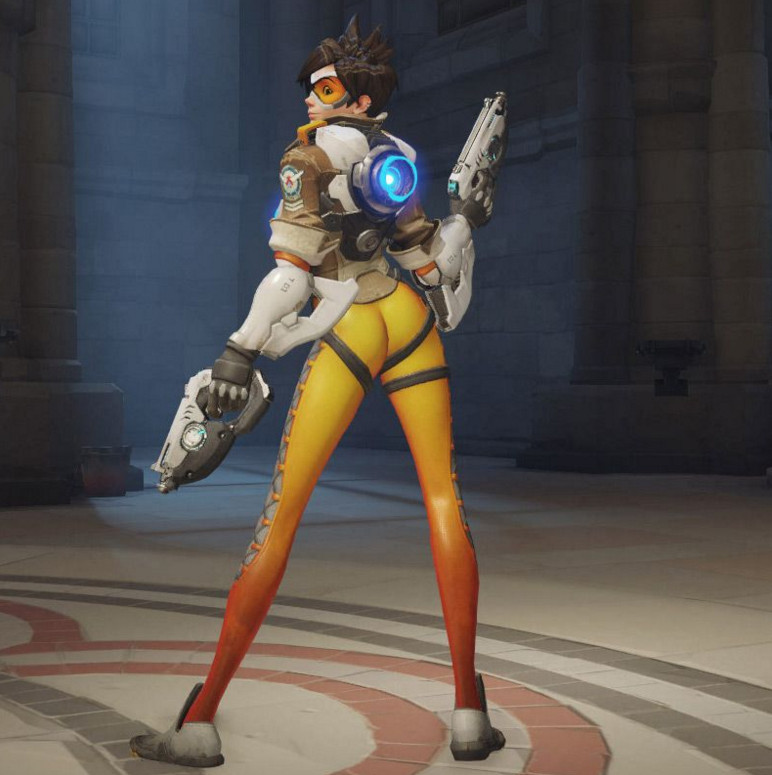
Video games as part of media heavily influence people's expectations on any topic imaginable. This can lead to a numbing effect of a topic like sexual portrayal of characters in games. This numbing being the idea that through extensive portrayal of women and men in video games, highly sexualized or ideal physical images are now blindly accepted, or even expected. To display this look at a controversy that occurred for Overwatch during it's closed beta in late March of 2016.

Overwatch is a video game released by Blizzard on 24 May, 2016. During the month of March it had a closed beta. Closed Beta being a testing period where people invited by Blizzard through email, were allowed to play the game, test it, and stream it.


During this beta time, a complaint was brought to Blizzard on their forums regarding a specific character and one of her optional victory poses. A forum user under the username Flipp, made a forum post saying that the pose turned Tracer (the character shown above) into a bland sex symbol and should be removed. Flipp went on to detail how their daughter knows who Tracer  is and will be growing alongside her. Flipp expressed how they had a daughter who wanted to watch the Overwatch Recall trailer every morning. Their own daughter being able to grow up alongside to these characters, Flipp asked Blizzard to focus on their commitment to strong female characters and avoid and remove elements like this pose that would undermine that. 


On the surface this controversy looks to deal with the overly sexualized nature of the victory pose put in the game. In fact though, and as user Flipp went to clarify in response to others on the forum, this controversy was about a character personality and portrayal disconnect. Tracer's body image and outfit were not under scrutiny here. Rather the focus of this controversy is that this pose conflicts with Tracer's personality. Meanwhile characters like Widow or D. Va who also have highly sexualized poses are not being criticized here, and as acknowledge by user Flipp, it is because that sexual nature is a part of their personality. 


In this controversy a numbing effect is easily viewable. Looking at those agreeing with user Flipp's argument, the sexual nature of material within the game is very important to them. However it strays away from the typical mass media article opinion of sexualization within games being a blatantly bad thing that needs removing. Instead their focus is that sexualized material needs to be justified in some way. This shows the numbing that media, and in particular video games have induced. 


The above video done by respected gaming critic Totalbiscuit, is a satirical based upon the forum post that began this controversy and it goes to mirror all of the same elements and points as the forum post. 

Within this video there is numbing as well. As a satirical it shows numbing but an awareness of it. This video in particular shows not only the numbing of sexualization of characters in games, but also hints at the blind acceptance of consumers being right. 

Over time video games have begun to include more and more sexualized content in various forms, from posters on in game walls, to vanity options for the player, and on to gameplay. Those consuming this material become acclimatized to it and begin to expect more of the same. Slowly the intesity and abundance of this material has increased in the video game industry. People eventually become numbed enough to not only accept without question the overly sexualized material in video games but to expect it. This numbing leaves games that do not reach a certain threshold of sexuality in their game less engaging and interesting for the numbed players. Which leads to a spiraling increase of sexuality content in games, furthering the over sexualized portrayal of both genders.

Through this are video games going down a path too difficult to return from? Are video games heading towards a future of only increasing numbing? The example posed by this controversy during the Overwatch beta is but one example amongst many. Further it goes to only address one topic, and games certainly display and influence many topics. Will video games simply continue to numb its players on these topics, or is there something that counters this spiral? Left unchecked this problem leads to a unachievable expectation for reality that cannot ever be met.

Solutions and counters against this problem look rather thin. Gamers have come to expect a certain degree of oversexualization of characters in video games. To remove that or lessen in any substatial way would of course be noticeable and spur a reaction. The largest reaction by probability is that people would not buy that game. After all, that game though closer to reality or serving to educate consumers about this problem will not have what the consumer wanted. This could lead to companies not wanting to take the risk. Why put out a revolutionary game, that would influence people towards more realistic expectations and standards if its unlikely to sell well. Instead companies are more likely, and as history shows, do the tried and true by giving the consumer the wants. This often being more of the same that the consumer bought just last year with little to minimal changes. A good example of this being Call of Duty games.

Was user Flipp's approach the right way then? Approaching the company of a video game receiving a lot of appreciation before launch, and expressing the concerns with some pieces of it to incite change. This can work and in the case of Overwatch did,thought it must be remembered this was during a testing period where drastic changes happen is the point. Acknowledgements should also be given that during the entirety of Overwatch's public awareness, Blizzard has been highly communicative with the community on concerns, topics, changes, and explanations, which is highly unusual for the video game industry. The point being that doing changes in this way requires a conversation being held on both ends, consumers and the company both have to be in communication. Should one be desynced from the other, arguing amongst itself, or not taking a large part in the discussion on a game, this method fails. 

For any solution to work, several things need to occur. Video games as media are not solely under the weight of this problem. It occurs in a far wider scope than just in that of video games. For any change to occur the media and what is desired from it has to change. This means having companies that are willing to put of content and/or material that lessens or change for the better the over sexualized standards that lead to increased numbing. Secondly consumers have to change their desires and values from the media. The media will make what people want and consumers make a far louder impact in the media when they speak with their wallets as well as their mouths. 

Flipp's argument has some merit here. One thing to take away from it is that video games can have strong, well rounded characters. Overwatch is respected for having done so recently, and consumers can express to the media the reasoning of why this works and show the support of it. Doing so will lead to the production of more well rounded characters.

Numbing is something that happens naturally in order to make living easier. Its how ideas like "the mundane day to day"  come about. Its a acclimatization to a commonality. Whenever this numbing may pose a problem or lead to something far worse, the way to change it is by changing what is common. For the media, as a business is serves to every day produce what sells, what captures people's eyes. Changing the media happens from a change in its consumers. To create change think of where the problem begins and how it is produced, not what puts it out of sight or mind. 

Sunday, June 12, 2016

Gender Norm Stereotypes in the Media

Note: I know that there is a larger "gender umbrella" but, with respect to all that fall under that umbrella, I will only focus on the two commonly known gender categories, masculine and feminine, for the purpose of this post. 

Both men and women are stereotyped in the media primarily as less real, more perfect, and more predictable. Stereotypes are more commonly portrayed in the media because they are easier to create. Some of the stereotypes put on men include them being brave, strong, rational thinkers, independent, and leaders. These stereotypes affect the expectations that women have of men in relationships and they even affect how men see other men in friendships and the work setting for example. Not only do these stereotypes affect how society views men, they also affect how men view themselves. Men shape their own views about how they should act and look and base their success as men on these assumptions. On the other hand, men are discouraged from "unmanly" traits such as the ability to feel or talk about a range of emotions, including fear, hurt, confusion or despair. Men are also not encouraged to learn to work cooperatively without the need for control, to love in a nonsexual way, and to solve conflicts without violence. They have to constantly prove their masculinity. 
Women, on the other hand, are stereotyped to be submissive, sensitive/emotional, incapable of making rational decisions, dependent on men, and exist only to meet the sexual needs of the man. These stereotypes affect the way that men treat women. In most cases, they are sexualized, treated as objects, and convinced that beauty is the most important thing of their existence. These stereotypes, like men, also affect the judgement from woman to woman and how women see themselves. Women are discouraged from authoritative positions in the work setting as this can be a threat to men and can be seen as "bitchy." Women are encouraged to have "clean jobs" like teachers, librarians, and secretaries or be stay-at-home moms. Women are under the pressure of beauty standards and are below the patriarchy. 
A few days ago, I watched the movie Deadpool (2016) about a man names Wade Wilson (Ryan Reynolds) who is a former Special Forces operative who now works as a mercenary. His world comes crashing down when evil scientist Ajax (Ed Skrein) tortures, disfigures, and transforms him into Deadpool. The rogue experiment leaves Deadpool with accelerated healing power and a twisted sense of humor. With help from mutant allies, Colossus and Negasonic Teenage Warhead (Brianna Hildebrand), Deadpool uses his new skills to hunt down the man who nearly destroyed his life. 
 (Warning: there may be some spoilers!) 
In my point of view, Deadpool broke some of society's stereotypical gender norms. Let me explain how: The film's male protagonist is a sarcastic and witty guy. Everything he does is a step to reunite him with his soulmate, Vanessa, and to get revenge on the guy who ruined his life, Ajax. Deadpool himself is a guy who has feelings and isn't afraid to show them. He admits to having a rough childhood and helps others by keeping them safe from dangerous situations. Although he is pretty heroic, he does not like to be called a Hero. Throughout the film, he jokes around about how handsome some if the bad guys he fights off are. Whether or not he means those comments, someone can assume that Deadpool is pansexual- he doesn't have a gender preference. Also note that he has a softer, lighter voice compared to other male "superheroes" who have deep voices. He made fun of himself in some scenes for not being the "manliest" guy out there. Another note, the posters for the film are humorous and are different from the strong-man-on- the-cover posters: there is one poster where Deadpool is standing in the very pose that we most often see female superheroes in (at just the right angle to display breasts and butt). As has been pointed out numerous times, female superheroes are made to pose in often ridiculous, overtly sexualized, and seriously degrading poses compared to their male counterparts.

Another male character in the movie is Colossus. Colossus, as you can imagine by his name, is a big, mighty man of steel with a soft side. He is respectful of women and shows a lot of rationality and sensitivity before fighting the bad guys- one of those bad guys being Angel Dust who kicks his ass. Check out their fighting scene below: 

 
You can see that at first, Colossus was not up for hitting a woman but once Angel Dust threw the first punch, he didn't hesitate to fight back. During the battle, one of Angel Dust's breasts came out & not only did Colossus give her the heads up, the film itself decided not to reveal her private parts. This was different from other action movies with female characters who are sexualized and other movies where women's bodies are fully exposed compared to men's. Speaking of nudity, Deadpool's penis was exposed during a fighting scene which was a shocker for me since we never see that in movies. But back to the characters- as mentioned and seen, Angel Dust is a powerful, badass woman. She is strong enough to kick Colossus' ass even after getting thrown around a bit. The only downfall with her character is that she tends to be bossed around by Ajax, who is capable enough of fighting his own battles but hey, at least it shows that Angel Dust isn't afraid of anything! 

Another badass female character is Negasonic Teenage Warhead who breaks the stereotypes of female superhero characters often seen in other movies. Her shaved head, pierced nose, and conservative costume breakaway from the sexualized female superhero image. As her name gives away, she is a teenager who pays no mind or care to what goes on around her. Her decisions are completely based on her causality. She is also the most powerful character in the movie. She saves the day with her powers which is different from other action movies where the male is usually the one to do all the work and save the day. But in this film, the happy ending wouldn't have happened if it hadn't been for the female superhero, Negasonic Teenage Warhead. 

And finally, Vanessa, Wade Wilson's (Deadpool) soulmate. She is the girlfriend character but she breaks so many gender norms that are normally looked down upon. For starters, she isn't the usual long,blonde haired and blue-eyed, damsel. She has short, brown hair and tattoos. She works as a prostitute and isn't ashamed of it at all; and her boyfriend doesn't shame her for it either. Another way that this character breaks from the stereotypical movie girlfriend is that she dominates in some of the sex scenes. In most films, the woman is shown to desire the man and the man sexually pleases the woman with male dominant sexual positions. In Deadpool, Vanessa dominates during the act with woman-on-top and in control positions. Finally, Vanessa is a fighter- emotionally and physically. She had a tough childhood but is confident in the way she lives her adult life and although Wade walked out on her and she thinks he died, she handles her emotions well. At the end of the movie, it seems like Deadpool is going to lose to Ajax until Vanessa stabs Ajax with a sword, saving Deadpool's life. Rather than the male protagonist going back to save the damsel in distress, it's the other way around where the woman saves the man. She fights back and saves the male. 

This movie was refreshing to watch as it changes the male comic book character to be funny and pose/act in ways that are often reserved for women and women are portrayed in ways that are often reserved for men. It definitely takes a jab at challenging Hollywood's and society's stereotypes of male and female comic book characters. One question we can ask is: How can other movies that aren't from comic books challenge or break the gender norm stereotypes? Well, we can start off by allowing more female directors and producers to take the lead in Hollywood. In 2015, women comprised only 7% of directors and 23% of producers in Hollywood's top 250 films. These numbers are staggering considering the amount of movies that are made and released. Once we get females to dominate both on-screen and behind the scenes, we might be able to see a change in the way that both men and women are represented in the film category of the media. Both male and female directors and producers can begin to change the way they represent both genders and their norms. By making movies more realistic and relatable with the help of real looking actors, then we might be able to see a change in the way that people see themselves and others. 


Word Count: 1,490

Sources: 
http://www.imdb.com/title/tt1431045/plotsummary
http://www.merriam-webster.com/dictionary/stereotype
http://variety.com/2015/film/news/women-hollywood-inequality-directors-behind-the-camera-1201626691/
Google Images